A Beginner's Guide to Pickleball Rules and Scoring
If you've been curious about pickleball but felt intimidated by not knowing the rules, you're not alone. The good news is that pickleball's rules are straightforward, and you can learn the basics in just a few minutes.
The Basics
Pickleball is typically played as doubles (though singles is also popular) on a badminton-sized court with a slightly modified tennis net. Players use solid paddles made of wood or composite materials to hit a perforated polymer ball over the net.
Serving Rules
The serve is where every point begins, and pickleball has specific serving requirements:
- Underhand only: The paddle must contact the ball below waist level
- Diagonal serve: You serve to the opponent's diagonal court
- Behind the baseline: Both feet must be behind the baseline when serving
- One attempt: Unlike tennis, you only get one serve attempt
The serve must clear the net and land in the opposite diagonal court, avoiding the non-volley zone (more on that shortly).
The Non-Volley Zone (Kitchen)
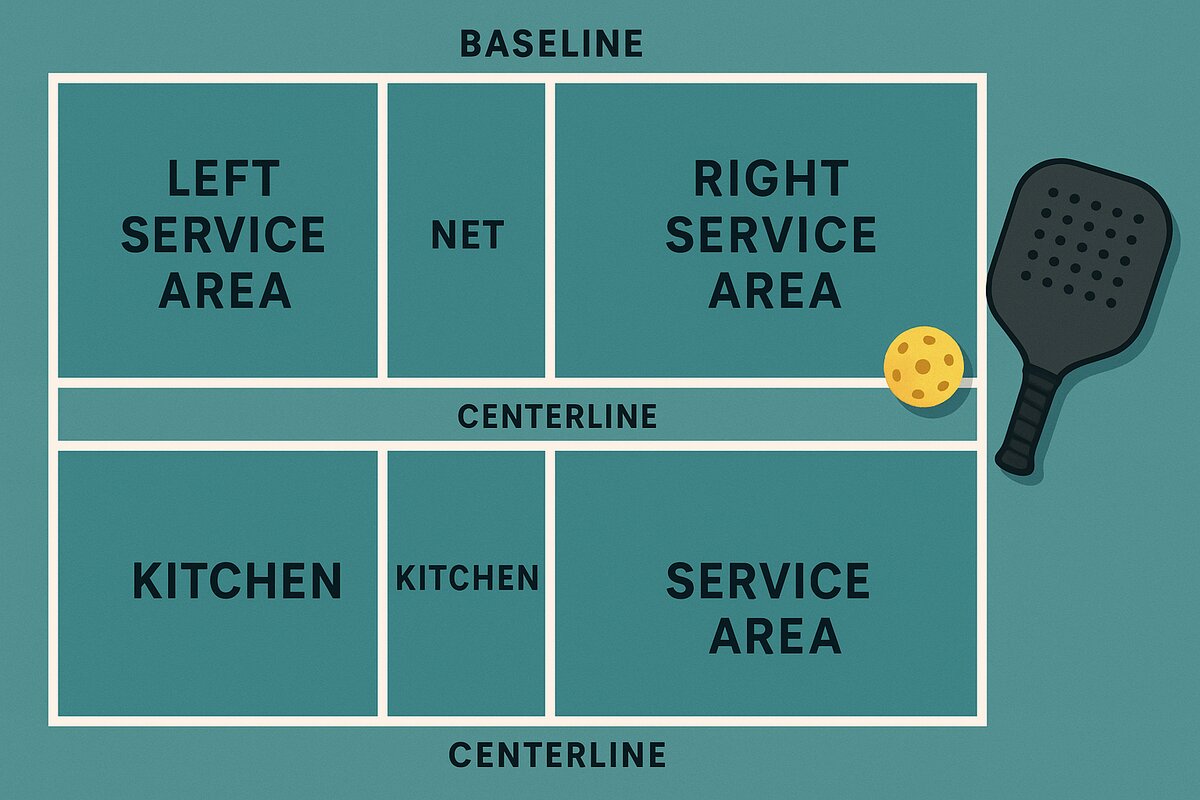
The most unique rule in pickleball involves the "kitchen" - a 7-foot zone on each side of the net. You cannot volley (hit the ball before it bounces) while standing in this zone. This rule prevents players from camping at the net and smashing every ball.
You can enter the kitchen to play a ball that has bounced, but you must let the ball bounce first if you're standing in or touching the kitchen line.
The Two-Bounce Rule
After the serve, each side must let the ball bounce once before volleying. This means:
- The receiving team must let the serve bounce
- The serving team must let the return bounce
After these two bounces, players can volley or play balls off the bounce.
Scoring
Scoring in pickleball can seem confusing at first, but it follows a simple pattern:
- Only the serving team can score points
- Games are typically played to 11 points (win by 2)
- In doubles, both players on a team get to serve before the serve passes to the opponents (except at the start of the game)
The score is called as three numbers: serving team's score, receiving team's score, and server number (1 or 2).
Common Faults
A fault occurs when:
- The ball is hit into the net
- The ball lands out of bounds
- A volley is hit from the kitchen
- The ball is volleyed before the two-bounce rule is satisfied
- The serve doesn't land in the correct service court
Court Etiquette
Good sportsmanship is central to pickleball culture:
- Call "ball on court" if a ball from another court enters your playing area
- Announce the score clearly before serving
- Compliment good shots, even from opponents
- Tap paddles after games as a sign of respect
Now that you know the basics, it's time to find a court and start playing. Most communities offer beginner sessions where experienced players help newcomers learn the ropes.