Indoor vs Outdoor Pickleball: Key Differences Every Player Should Know
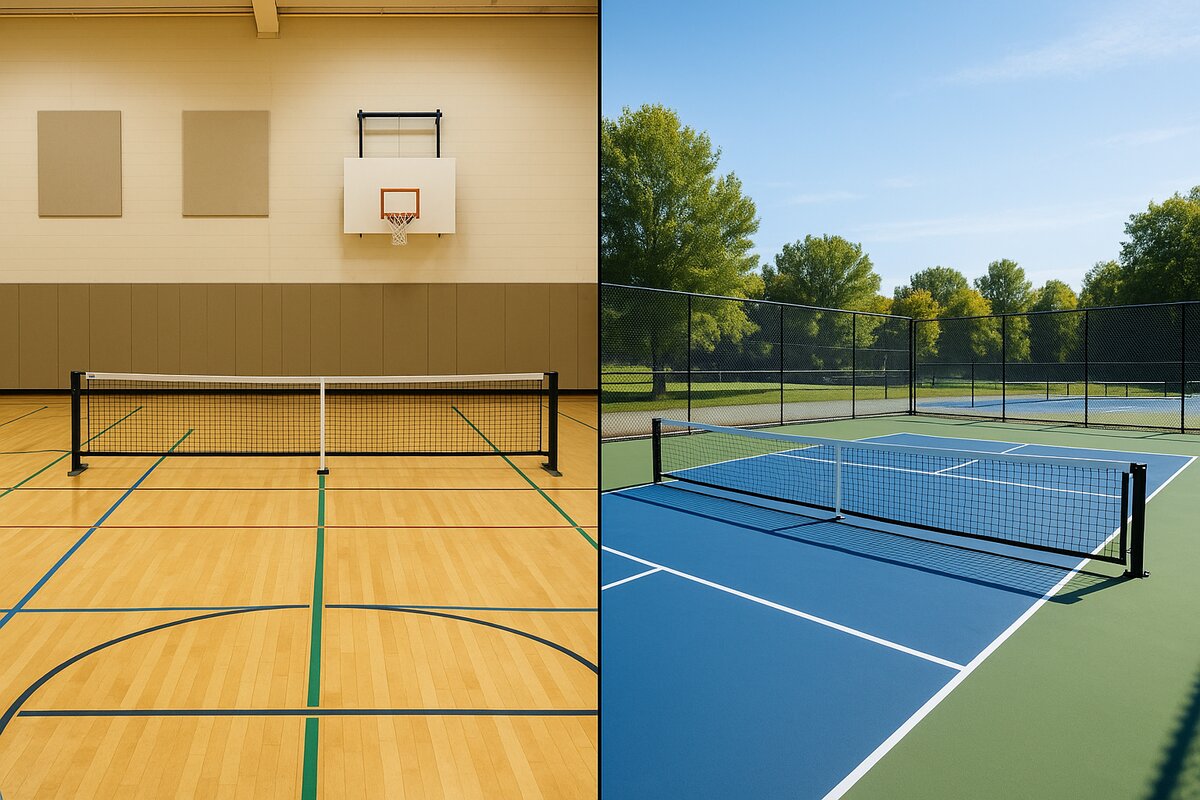
One of pickleball's greatest strengths is its versatility - you can play it almost anywhere. But the game plays quite differently indoors versus outdoors. Understanding these differences will help you adapt your strategy and equipment choices.
The Balls Are Different
The most significant difference is the ball itself:
Outdoor Balls
- Harder plastic with smaller, more numerous holes (40 holes typically)
- Heavier (approximately 0.9 oz)
- More durable to withstand rough surfaces
- Travel faster through the air
- Popular brands: Dura Fast 40, Franklin X-40, Onix Pure 2
Indoor Balls
- Softer plastic with larger, fewer holes (26 holes typically)
- Lighter (approximately 0.8 oz)
- Less affected by air currents
- Slower, more controllable flight
- Popular brands: Onix Fuse, Jugs, Franklin X-26
Playing Surface Matters
Outdoor Courts
Most outdoor courts are made of concrete or asphalt, similar to tennis courts. These surfaces:
- Cause more ball bounce
- Create more friction on the ball
- Can be affected by cracks or uneven spots
- Generate more wear on shoes
Indoor Courts
Indoor facilities often use gymnasium floors, sport court tiles, or specialized surfaces:
- More consistent bounce
- Typically faster play due to smoother surface
- Less wear on equipment
- More predictable conditions
Weather and Environment
Outdoor Challenges
- Wind: The biggest variable. Even light wind significantly affects ball flight, especially on lobs and third shots. Experienced outdoor players learn to use the wind to their advantage.
- Sun: Glare can affect visibility, particularly on serves and overheads. Many players wear hats and sunglasses.
- Temperature: Cold weather makes balls harder and bouncier; heat makes them softer. Extreme cold can cause balls to crack.
- Humidity: Affects grip on both paddle and ball.
Indoor Advantages
- Consistent temperature and no wind
- No weather cancellations
- Controlled lighting
- Year-round availability
Strategic Differences
Outdoor Strategy
- Third shot drops are more difficult due to wind
- Driving the ball is often more effective
- Lobs are risky in windy conditions
- Serve placement matters more than power
- Players often play more conservatively
Indoor Strategy
- Soft game and dinking are more effective
- Third shot drops are easier to execute
- Ball control becomes paramount
- Fast hands at the kitchen are crucial
- Spin is more consistent and reliable
Equipment Considerations
Shoes
Outdoor courts require shoes with durable outsoles, often with herringbone patterns for lateral movement. Indoor courts need non-marking soles; some players prefer volleyball or basketball shoes.
Paddles
While most paddles work in both environments, some players prefer:
- Heavier paddles outdoors for more power against wind
- Control-oriented paddles indoors for finesse play
Clothing
Outdoor play may require:
- Sun protection (hats, sunscreen, UV-protective clothing)
- Layers for temperature changes
- Wind-resistant outer layers
Finding Your Preference
Many players develop a preference for one environment:
Outdoor enthusiasts enjoy:
- Fresh air and vitamin D
- More casual, social atmosphere
- The challenge of adapting to conditions
- Often free public courts
Indoor players appreciate:
- Consistent conditions for skill development
- Climate-controlled comfort
- Year-round play regardless of weather
- Often better court quality
Transitioning Between Environments
If you primarily play in one environment, give yourself adjustment time when switching:
- Outdoor to Indoor: You may overhit initially. Focus on touch and control.
- Indoor to Outdoor: Wind will feel extreme at first. Lower your trajectory and be patient.
The best players are comfortable in both settings. Try to get experience in each environment to become a more complete player.