Pickleball Court Etiquette: The Unwritten Rules Every Player Should Know
Pickleball is known for its welcoming community, but like any sport, there's an unwritten code of conduct that helps keep the experience positive for everyone. Whether you're playing at a public park or a private club, following these etiquette guidelines will make you a valued member of the pickleball community.
Court Rotation and Waiting
The Paddle Queue
At busy courts, the standard practice is to place your paddle in a rack or line to indicate you're waiting to play. When a game ends, the next four paddles in line form the next group. Don't try to jump the queue or hover around courts hoping to be picked.
Winner Stays vs. Rotation
Different venues have different rules. Some play "winner stays," where the winning team remains on court. Others rotate all players after each game. Ask about the local custom before assuming.
Time Limits
During peak hours, be mindful of how long you've been playing. If people are waiting, consider limiting games to 15-20 minutes or playing to fewer points.
On-Court Behavior
Call Your Own Lines
In recreational play, players call their own lines. If you're not sure whether a ball was in or out, give your opponent the benefit of the doubt. Nothing sours a game faster than contentious line calls.
Announce the Score Clearly
Before serving, announce the score loudly enough for all players to hear. This prevents disputes and keeps the game flowing.
Ball Management
If a ball from another court rolls onto yours, immediately call "ball on court" and stop play. Return stray balls promptly and courteously - roll them back gently rather than smashing them.
Avoid Foot Faults
While recreational games rarely enforce foot faults strictly, try to serve from behind the baseline. It's a good habit that will serve you well in competitive play.
Sportsmanship
Compliment Good Shots
A quick "nice shot" or "good get" acknowledges your opponent's skill. This positive reinforcement is part of what makes pickleball culture special.
Don't Coach Mid-Game
Unless someone specifically asks for advice, save your tips for after the game. Unsolicited coaching during play can come across as condescending.
Paddle Tap After Games
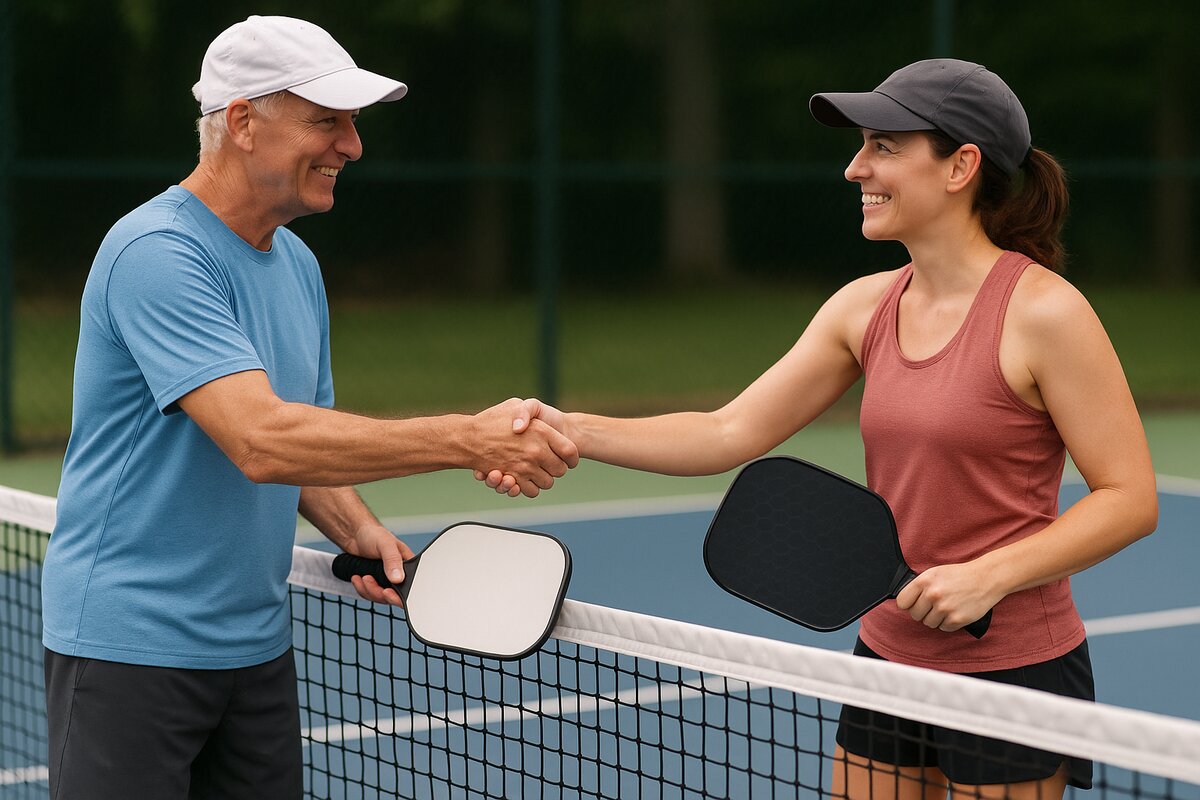
The traditional pickleball greeting is a paddle tap (like a handshake). After each game, meet your opponents at the net and tap paddles as a sign of respect.
Handle Disputes Gracefully
If there's a disagreement about a call, the point is typically replayed. Don't argue or become defensive. The point isn't worth damaging relationships.
Playing with Mixed Skill Levels
Adjust Your Game
When playing with less experienced players, focus on keeping the ball in play rather than hitting winners. Use it as an opportunity to work on placement and consistency.
Be Encouraging
Everyone was a beginner once. Encourage new players and help them feel welcome. The growth of our sport depends on welcoming newcomers.
Don't Apologize Excessively
If you're the less experienced player, avoid constant apologies for mistakes. Everyone makes errors. Focus on having fun and improving.
General Courtesy
Arrive Ready to Play
Don't take 15 minutes to stretch and warm up while others wait. Arrive early enough to be ready when it's your turn.
Keep Noise Reasonable
While pickleball is social, be mindful of excessive noise, especially early in the morning or in residential areas.
Clean Up After Yourself
Take your water bottles, ball tubes, and any trash when you leave. Leave the courts as you found them.
Following these guidelines won't just make you a better community member - they'll help you enjoy the game more too. Pickleball's culture of inclusivity and good sportsmanship is what keeps people coming back.