Pickleball Court Surface Options: How to Choose the Right Surface
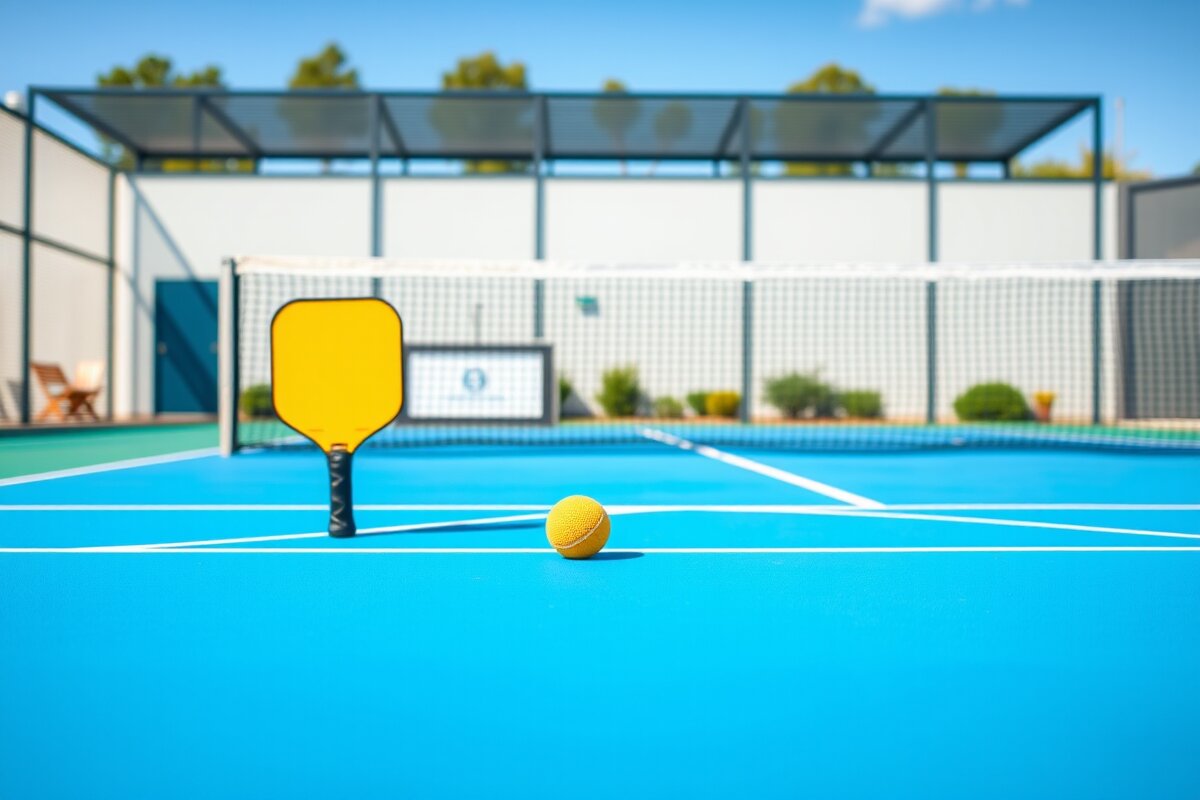
Comparing pickleball court surface options is one of the fastest ways to improve how the game feels — ball bounce, court speed, shoe grip, and joint impact all change depending on whether you play on concrete, asphalt, modular sport court tiles, or a wood gymnasium floor. If you have ever switched from an outdoor hard court to an indoor gym and noticed the ball behaving differently, you have experienced this firsthand.
Whether you are choosing where to play, evaluating a facility, or planning a build or resurface, this pickleball court surfaces guide covers the major surface types, pros and cons, how each one affects gameplay, acrylic coatings and overlays, and a practical framework for picking the best surface for your body and goals.
Jump to a section:- Why surface matters
- Pickleball court surface options
- How surface affects gameplay
- Acrylic coatings and overlays
- How to choose where to play
- Quick compare: concrete vs asphalt vs tiles vs wood
- Finding courts with the right surface
- FAQ
For how indoor and outdoor environments change the game beyond the surface, see our indoor vs outdoor pickleball guide. Planning a backyard build? Pair this with our DIY home court guide and the beginner paddle buying guide.
Why Pickleball Court Surface Matters
The surface is the foundation of every rally. It determines how the ball bounces, how fast the game plays, how much traction your shoes get, and how much stress your knees and ankles absorb over a session. Two players with identical skills will have noticeably different experiences on concrete versus sport court tiles, and a shot that works perfectly on a smooth gym floor may behave unpredictably on rough asphalt.
Surface also matters for long-term health. Players who log dozens of hours per week on hard, unforgiving surfaces are more likely to develop joint pain, shin splints, and fatigue-related injuries than those who play on cushioned or suspended surfaces. Choosing the right pickleball court surface is not just about performance — it is about sustainability.
Pickleball Court Surface Options
There are four main pickleball court surface options you will encounter at facilities across the country. Each has distinct characteristics that affect playability, comfort, cost, and maintenance. Use the sections below to compare concrete, asphalt, modular sport court tiles, and wood gym floors.
Concrete
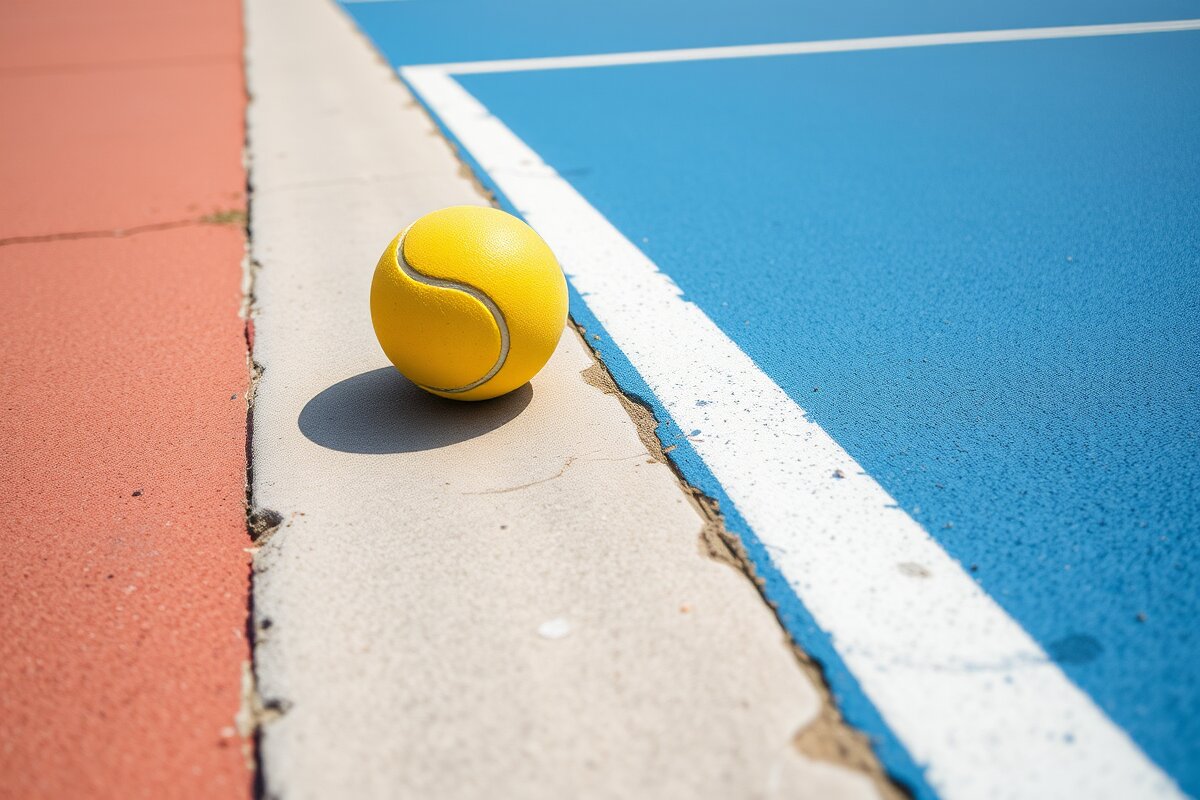
Whatever surface you choose, the markings are the same. Our court lines and markings guide covers dimensions, line width and blended lines on tennis courts.
Concrete is the most common outdoor pickleball court surface in the United States. Most public parks and recreation departments pour concrete courts because the material is durable, relatively affordable to install, and requires minimal maintenance. Many dedicated pickleball facilities and converted tennis courts use concrete as their base.
Pros:- Durable and long-lasting with minimal upkeep
- Provides a consistent, predictable ball bounce
- Accommodates acrylic coatings that improve traction and reduce glare
- Lower installation cost compared to modular surfaces
- Performs well in all weather conditions when properly drained
- Very hard on joints — knees, ankles, and hips absorb significant impact
- Can develop cracks over time due to ground settling or freeze-thaw cycles
- Surface temperature can become extremely hot in direct sunlight
- No built-in cushioning or shock absorption
- Uncoated concrete can be abrasive on shoes and balls
Most concrete pickleball courts are finished with an acrylic coating system that adds color, texture, and a small degree of grip. These coatings improve playability compared to raw concrete, but they do not add meaningful cushioning. If you play primarily on concrete, investing in high-quality court shoes with adequate cushioning is essential for protecting your joints over time.
Asphalt
Asphalt is the second most common outdoor pickleball court surface. It is less expensive to install than concrete and is frequently used for community courts, temporary setups, and conversions of existing tennis or basketball courts. Many older public courts sit on asphalt bases.
Pros:- Lower installation cost than concrete
- Can be resurfaced with acrylic coatings to improve playability
- Widely available — many existing courts already use asphalt
- Suitable for outdoor environments
- Rougher texture than concrete, which wears out balls and shoes faster
- More prone to cracking, shifting, and developing uneven spots
- Surface softens in extreme heat, which can affect ball bounce and footing
- Requires more frequent maintenance and resurfacing than concrete
- Just as hard on joints as concrete, with less consistent bounce
Asphalt courts that receive a proper acrylic coating play reasonably well, but the underlying surface is inherently less smooth and stable than concrete. The rougher texture chews through outdoor pickleballs faster, and cracks tend to develop sooner. If you are playing on asphalt, check the court condition before starting — uneven patches and cracks can cause bad bounces and increase ankle sprain risk.
Modular Sport Court Tiles
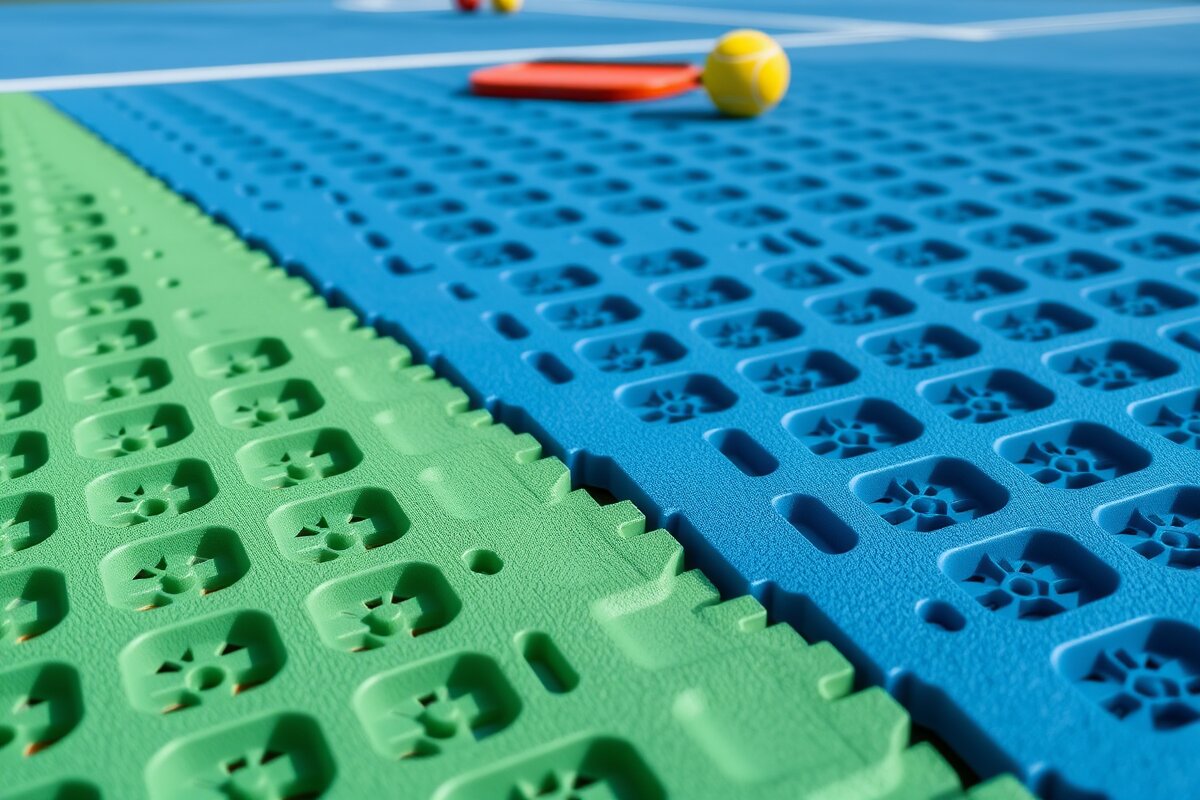
Modular sport court tiles — often referred to by brand names like SnapSport, Sport Court, or VersaCourt — are interlocking plastic tiles that snap together over a hard base. These surfaces have become increasingly popular at dedicated pickleball facilities, both indoors and outdoors. Many tournament venues and private clubs use modular tiles because of their performance characteristics.
Pros:- Built-in shock absorption reduces joint stress significantly
- Consistent, even surface with predictable ball bounce
- Excellent drainage through the tile gaps — courts dry quickly after rain
- Can be installed over existing concrete or asphalt
- Replaceable — damaged tiles can be swapped without resurfacing the entire court
- Available in multiple colors for clear line visibility
- Lower surface temperature than concrete in direct sun
- Higher upfront cost than concrete or asphalt
- Slightly different ball bounce — some players describe it as a bit "deader"
- Tiles can shift or separate over time without proper installation and a stable base
- Surface texture can wear smooth in high-traffic areas after several years
- Some players find the traction characteristics different from traditional hard courts
For players who prioritize joint health and comfort, modular tiles are often the best surface for pickleball in terms of long-term body preservation. The cushioned, slightly flexible surface absorbs impact that would otherwise travel through your feet, knees, and lower back. This is especially valuable for older players, anyone with existing joint issues, and people who play several times per week. Many players report being able to play longer sessions on sport court tiles without the soreness they experience on concrete.
Wood Gymnasium Floors
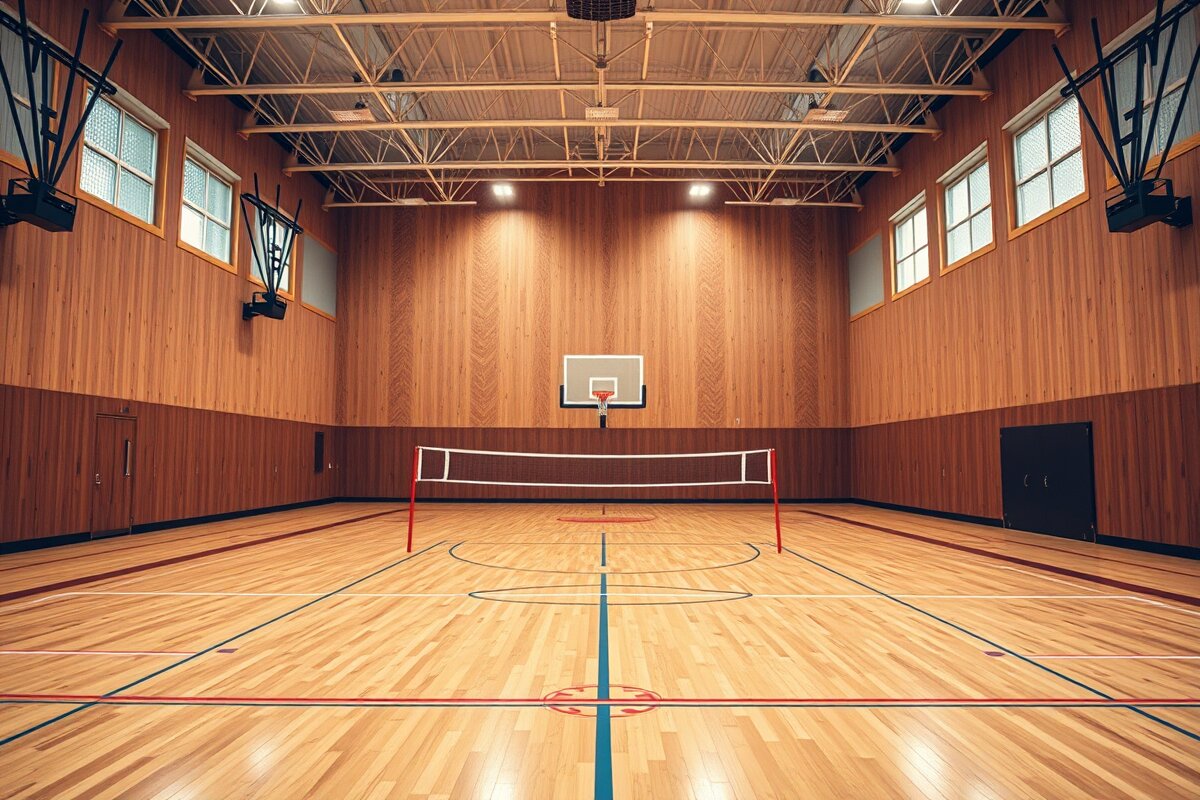
Indoor pickleball is frequently played on hardwood gym floors — the same maple surfaces you find in basketball and volleyball gyms. Community centers, YMCAs, churches, and school gymnasiums are common indoor pickleball venues, and nearly all of them feature wood floors.
Pros:- Smooth, consistent surface with reliable ball bounce
- Suspended wood floors offer excellent shock absorption — far gentler on joints than concrete
- Climate-controlled environment eliminates wind, sun, and weather variables
- Non-abrasive surface is easy on shoes and extends ball life
- Excellent traction when properly maintained
- Court lines are often shared with basketball, volleyball, and badminton — visual clutter can be confusing
- Availability depends on gym scheduling and may be limited to certain hours
- Dusty or poorly maintained floors become slippery and dangerous
- Requires indoor balls — outdoor balls are too hard and can damage the floor
- Some gym floors lack dedicated pickleball lines entirely, requiring temporary tape lines
Wood gym floors with a proper suspension system underneath are among the most joint-friendly surfaces available for pickleball. The floor flexes slightly with each step, absorbing shock that hard surfaces cannot. Players who deal with chronic knee or back pain often find indoor gym play significantly more comfortable. The trade-off is shared scheduling and the visual complexity of multi-sport line markings.
How Surface Affects Gameplay
Understanding how each pickleball court surface changes the way the ball behaves and how your body responds helps you adjust your game and choose the right courts for your needs.
Ball Speed and Bounce
Harder, smoother surfaces produce a faster game. Concrete with a fresh acrylic coating plays fast — the ball skids through the court and bounces high and true. Asphalt, especially when worn, produces a slightly slower and less predictable bounce due to surface irregularities.
Modular tiles tend to absorb a small amount of the ball's energy on contact, producing a slightly lower and softer bounce than concrete. Players switching from concrete to sport tiles often notice they need to adjust their timing on returns and third shot drops.
Wood gym floors play fast with a low, consistent bounce. The smooth surface generates minimal friction, which means the ball skips through quickly. Indoor balls compound this effect — their softer construction and larger holes make them slower through the air but responsive off the floor. The combination of a smooth surface and a soft ball rewards touch and control over raw power.
Traction and Footwork
Concrete and asphalt with acrylic coatings provide solid traction for lateral movement, which is critical for pickleball. Modular tiles offer good grip but feel slightly different underfoot — some players describe a subtle "give" that takes a session or two to get used to. Wood floors provide excellent traction when clean and dry, but dust, moisture, or worn finishes can create dangerously slippery spots.
Regardless of surface, proper court shoes are non-negotiable. Running shoes and casual sneakers lack the lateral support and sole design needed for the quick side-to-side movements pickleball demands.
Joint Impact and Fatigue
This is where surface choice has the most significant long-term impact. Concrete and asphalt are unforgiving — every step, lunge, and pivot sends shock through your lower body. Over a two-hour session, that impact accumulates. Players who log heavy hours on hard surfaces are more likely to develop knee pain, plantar fasciitis, shin splints, and general fatigue.
Modular tiles and suspended wood floors absorb a meaningful portion of that impact. The difference is noticeable within a single session and becomes dramatic over weeks and months of regular play. If you have the choice between a concrete court and a sport tile court, your joints will thank you for choosing the tiles.
Acrylic Coatings and Overlays
Many concrete and asphalt courts receive an acrylic coating system — the same type used on professional tennis courts. These coatings are applied in multiple layers and serve several purposes: they add color and line markings, improve ball bounce consistency, provide textured grip for shoe traction, and protect the underlying surface from weather damage.
Coating systems vary in quality. A well-applied, multi-layer acrylic system on a properly prepared concrete base produces an excellent playing surface. A thin, cheap coating on cracked asphalt will peel and deteriorate quickly. When evaluating courts, look for even coloring without bald patches, consistent texture across the playing area, and clear line markings. Courts with worn or peeling coatings play unpredictably and can be slippery in wet conditions.
Some premium coating systems include a cushioned layer beneath the acrylic surface. These cushioned systems reduce the hardness of concrete by adding a rubberized underlayer that absorbs impact. Facilities with cushioned acrylic surfaces offer a meaningful improvement in comfort over standard hard-court coatings, though they are more expensive to install and maintain.
Acrylic coating alone is not a separate base surface — it is a finish on concrete or asphalt. When people talk about "the best pickleball court surface," they often mean the combination of base (concrete, asphalt, tiles, or wood) plus finish and condition.
What to Look for When Choosing Where to Play
Now that you understand the differences between pickleball court surface options, here is a practical framework for choosing where to play based on your priorities.
If Joint Health Is Your Top Priority
Choose modular sport court tiles or a suspended wood gym floor. These surfaces reduce impact stress significantly compared to concrete and asphalt. If you are over 50, have existing joint issues, or play more than three times per week, surface cushioning should be a major factor in where you play.
If You Want the Most Consistent Ball Bounce
Freshly coated concrete and wood gym floors offer the most predictable bounce characteristics. Modular tiles are a close second. Avoid asphalt courts with visible cracks, patches, or uneven areas — these create unpredictable bounces that affect competitive play.
If You Play Year-Round
Having access to both indoor and outdoor courts gives you the most flexibility. Indoor wood or tile courts keep you playing through winter, rain, and extreme heat. Outdoor concrete or tile courts are ideal when the weather cooperates. Many dedicated players maintain memberships or routines that include both environments.
If You Are Building or Resurfacing a Court
For a private or community court project, modular sport court tiles over a concrete base offer the best combination of performance, durability, comfort, and maintainability. Concrete with a quality cushioned acrylic coating is a strong second option at a lower price point. Standard concrete with a basic acrylic coating is the most budget-friendly choice that still produces a good playing surface. For step-by-step home builds, cost ranges, and DIY vs contractor guidance, see our how to build a pickleball court at home guide.
Quick Compare: Concrete vs Asphalt vs Tiles vs Wood
Use this snapshot when you are weighing pickleball court surface options side by side. Condition matters as much as material — a well-kept hard court often plays better than a neglected premium surface.
- Concrete (+ acrylic) — Most common outdoors. Consistent bounce when coated; hard on joints; durable and relatively low maintenance.
- Asphalt (+ acrylic) — Lower install cost; more cracking and unevenness risk; similar joint impact to concrete; check condition before you play.
- Modular sport court tiles — Best everyday cushioning for many players; quick drainage; higher upfront cost; slightly different bounce feel.
- Wood gym floor — Smooth indoor play; excellent when suspended; shared multi-sport lines and schedules; use indoor balls.
There is no universal "best" surface — match the option to your joints, climate, budget, and whether you are choosing a public court or building your own.
Finding Courts With the Right Surface
Not every court listing tells you what surface type you will find when you arrive. Use our court finder to search for pickleball courts near you — facility listings often include surface details, indoor or outdoor designation, and the number of courts available. Prefer destinations with strong local play scenes? Browse our best cities for pickleball in 2026. Missing a facility you love? Submit a court so other players can find it.
When visiting a court for the first time, pay attention to the surface condition. Look for cracks, uneven areas, peeling coatings, and debris. A well-maintained court on any surface plays better than a neglected court on a premium one. If you notice hazards, report them to the facility manager — it helps the entire local community.
Making the Best Choice for Your Game
There is no single best surface for pickleball that works for every player in every situation. Concrete is the most widely available and plays well when properly coated. Asphalt gets the job done at a lower cost but sacrifices some consistency and durability. Modular sport court tiles offer the best balance of performance and joint protection for many regular players. Wood gym floors provide a smooth, comfortable indoor experience with the trade-off of shared scheduling.
The right surface for you depends on your body, your goals, and what is available in your area. If you can, try playing on multiple surface types and notice how each one affects your comfort, your shot-making, and how you feel the next morning. That firsthand experience is worth more than any guide — and it gives you the information you need to choose the courts that will keep you playing your best for years to come.
Once you know which pickleball court surface options fit you, bring the right gear: start with our first paddle buying guide, then use the court finder to book time on the surfaces you prefer.
Pickleball Court Surface FAQ
What are the main pickleball court surface options?
The four you will see most often are concrete (usually with acrylic coating), asphalt (often coated), modular sport court tiles, and wood gym floors for indoor play. Acrylic coating is a finish on hard courts, not a separate base type.
What is the best surface for pickleball?
It depends on your priority. For joint comfort, modular tiles or a suspended wood gym floor usually win. For consistent outdoor bounce and wide availability, coated concrete is the most common strong choice. Condition and maintenance matter as much as the material name.
Is concrete or asphalt better for pickleball?
Coated concrete is typically more stable and consistent long term. Asphalt is often cheaper to install but cracks and softens in heat more readily. Both are hard on joints compared with tiles or suspended wood.
Are sport court tiles worth it?
Many regular players prefer tiles for cushioning, drainage, and replaceable sections — especially if they play several times a week or have joint concerns. Upfront cost is higher than a basic coated hard court.
What surface should I choose if I am building a home court?
Concrete with acrylic coating is the most common permanent home base; modular tiles over an existing flat pad are the most DIY-friendly comfort upgrade. See our DIY pickleball court guide for dimensions, cost ranges, and install steps.
Do indoor and outdoor surfaces play differently?
Yes. Outdoor hard courts and tiles interact with weather, sun, and outdoor balls; indoor wood or tile courts are climate-controlled and usually require indoor balls. Our indoor vs outdoor guide covers equipment and strategy beyond the surface itself.