Pickleball Drills for Beginners: 10 Essential Practice Exercises
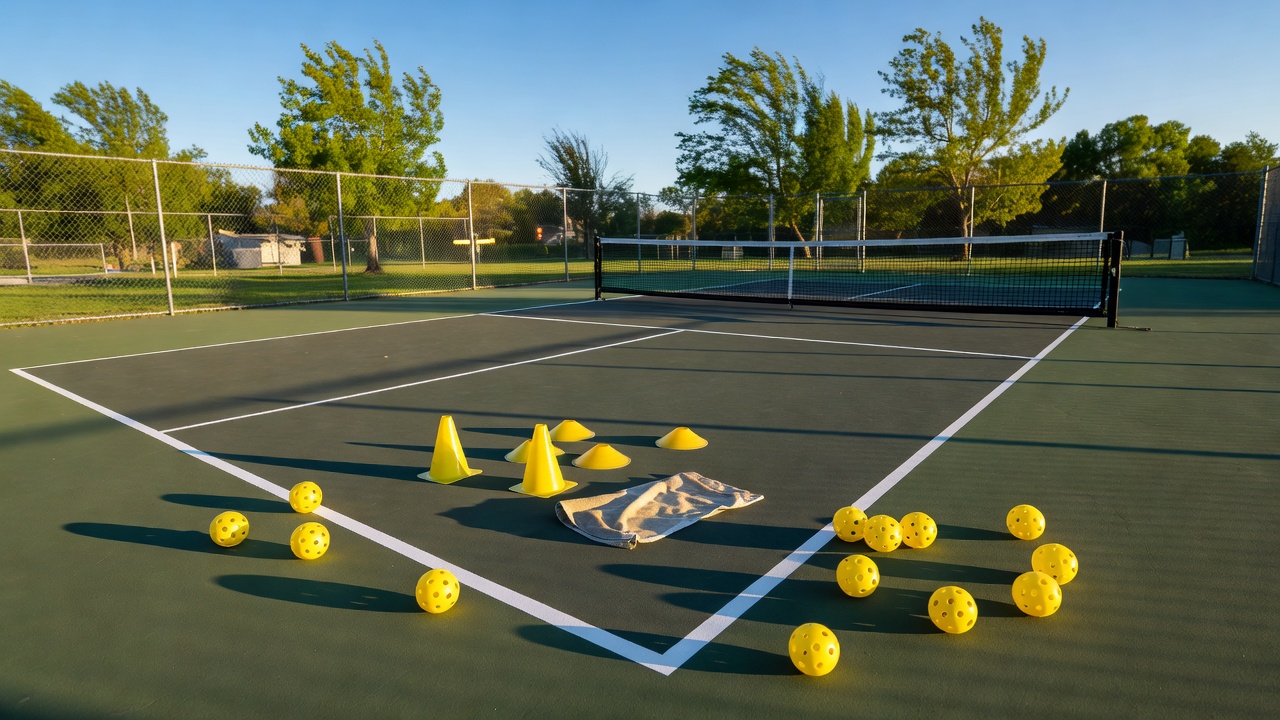
These pickleball drills for beginners turn open-play frustration into measurable progress. You do not need a coach, a fancy ball machine, or a private club — just a paddle, a few balls, and a plan you will actually repeat.
Who this is for: brand-new players through early intermediates who can already keep a short rally going and want cleaner serves, dinks, drops, and footwork.
Equipment needed: one paddle, 3–6 outdoor or indoor pickleballs (match the balls to your surface), court shoes if you have them, and optionally cones or towels as targets plus a partner or a blank wall.
If rules still feel fuzzy, skim the beginner's guide to pickleball rules first, then come back here for the reps.
Why Drills Matter More Than Just Playing Games
Playing games is fun, but games alone are not the fastest way to improve. During a game you might only hit a particular shot a handful of times. A focused drill lets you repeat that same shot dozens or even hundreds of times in a short session. Repetition is how your body learns to execute shots without thinking, and that automatic execution is what separates confident players from hesitant ones.
Drills also let you isolate weaknesses. If your serve lands in the net too often, a five-minute serving drill exposes the problem and gives you space to fix it without the pressure of a live point. Think of drills as the practice room and games as the performance stage — you need both, but the practice room is where real growth happens.
Pickleball Basic Drills You Can Do on Any Court
The following drills require nothing more than a paddle, a few balls, and a standard pickleball court. Find free public courts on our pickleball court map when you need a place to practice. If you are brand new, review the beginner's guide to pickleball rules first so the terminology makes sense.
1. The Target Serve Drill
Consistent serving keeps you in control of the game from the first shot. Place a towel, cone, or water bottle in the back third of the diagonal service box. Stand behind the baseline and hit 20 serves, aiming for the target. Track how many land within a paddle-length of the marker.
Focus points:
- Use a relaxed underhand motion
- Contact the ball below your waist
- Follow through toward your target
- Alternate between serving to the left and right boxes
Once you can hit the target zone 15 out of 20 times, move the target to a different area of the service box to develop placement variety.
2. The Dink Box Drill
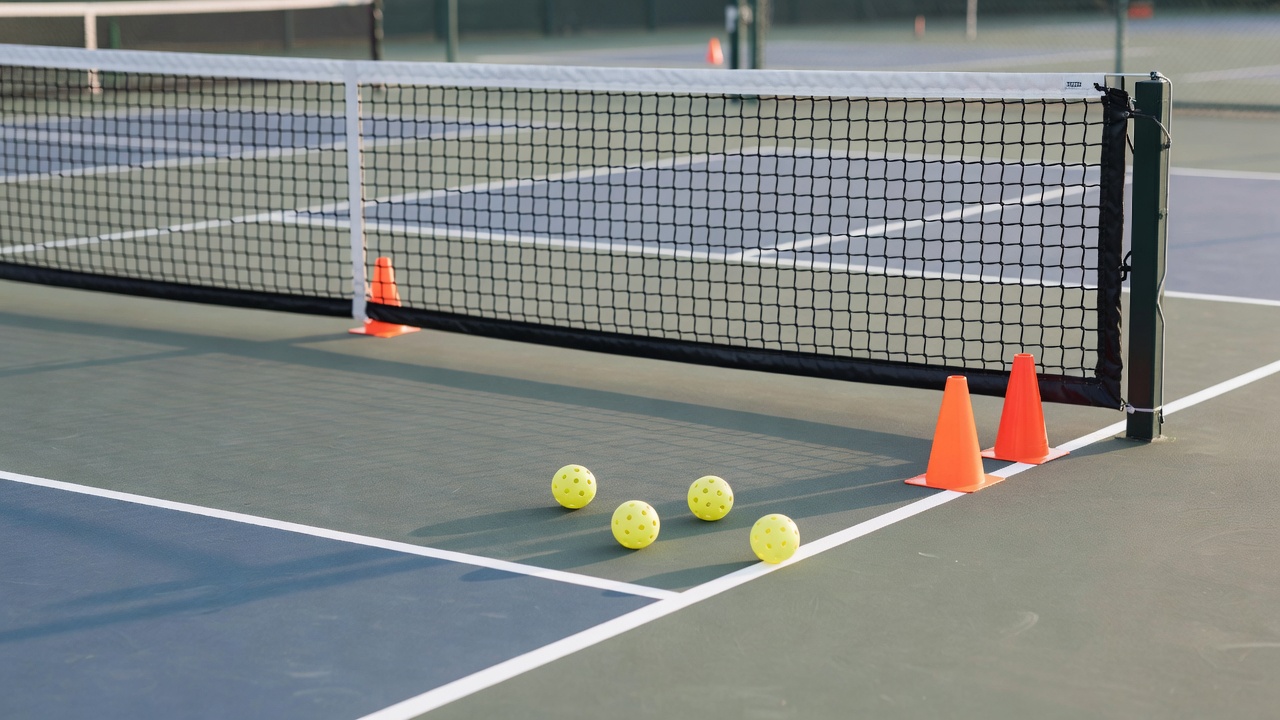
Dinking is the foundation of the soft game, and mastering it early gives beginners a huge advantage. Stand at the kitchen line across from a partner. Dink the ball back and forth, keeping every shot inside the non-volley zone. Count consecutive successful dinks and try to beat your record each session.
Focus points:
- Bend your knees, not your back
- Use a pushing motion rather than a swing
- Keep the paddle face slightly open
- Aim for your partner's feet or just over the net
For a deeper breakdown of dink technique and advanced patterns, check out our guide to mastering the dink shot.
3. The Third Shot Drop Drill
The third shot drop is one of the hardest shots in pickleball, but practicing it early builds the touch that separates developing players from those who plateau. Have your partner stand at the kitchen line while you stand near the baseline. Feed yourself a ball (bounce and hit) and try to land a soft arc shot into your partner's kitchen.
Focus points:
- Use an upward lifting motion with your legs
- Keep the paddle face open
- Hit the ball gently — less is more
- Aim for the ball to peak on your side of the net and fall into the kitchen
Do sets of 10 from each side of the court. Even if most attempts miss at first, your touch will improve rapidly over a few sessions.
4. The Volley Reflex Drill
Quick hands win points at the kitchen line. Stand about seven feet from a partner, both of you at the net. Volley the ball back and forth without letting it bounce. Start slow and gradually increase pace. The goal is to maintain control even as speed picks up.
Focus points:
- Keep the paddle in front of your body and above waist height
- Use short, compact motions — no big swings
- Stay on the balls of your feet
- Track the ball all the way to your paddle
This drill builds the fast-twitch reactions you need during rapid exchanges at the net.
5. The Skinny Singles Drill
Skinny singles is played using only half the court — one player uses the right half and the other uses the left half (or both play on the same diagonal half). This forces you to hit precise shots to a smaller target while getting plenty of repetitions. Play regular scoring rules but confine all shots to your designated half.
Focus points:
- Accuracy over power
- Moving your feet to set up each shot
- Practicing serves, returns, and transitions in a focused area
Skinny singles is one of the best pickleball drills for beginners because it simplifies decision-making while demanding shot accuracy.
When you are ready for full-court tactics, pair skinny singles with our pickleball singles strategy guide.
Pickleball Wall Drills for Beginners
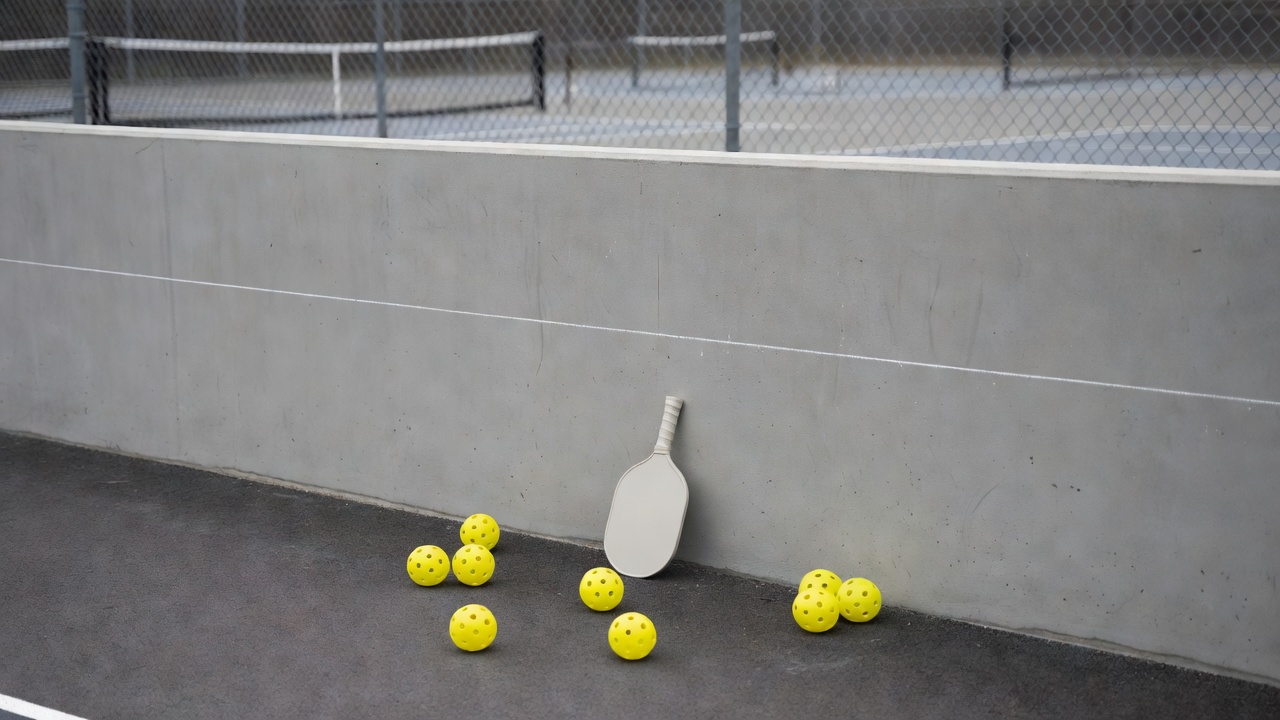
You do not need a court or a partner to improve. A flat wall, a paddle, and a ball are all it takes. Pickleball wall drills for beginners are perfect for days when you cannot get to a court, and they build paddle control faster than almost anything else.
6. The Wall Rally Drill
Stand about eight feet from a solid wall. Hit the ball against the wall and keep a continuous rally going. Start with forehands only, then backhands only, then alternate. Count your consecutive hits and try to set new personal records.
Focus points:
- Stay in an athletic stance with knees bent
- Use controlled, compact strokes
- Focus on hitting the ball at a consistent height on the wall
- Move your feet to stay balanced after each shot
Beginners should aim for 20 consecutive hits. Intermediate targets are 50 or more without a miss.
7. The Wall Dink Drill
Stand three to four feet from the wall and softly tap the ball against it, simulating kitchen-line dinking. Keep the ball low and controlled. This drill develops the gentle touch you need for soft game exchanges.
Focus points:
- Minimal backswing
- Soft hands and a loose grip
- Alternate between forehand and backhand dinks
- Keep the ball below waist height on the wall
This is one of the most effective pickleball drills for beginners at home because it directly translates to real-game dinking ability.
8. The Wall Volley Speed Drill
Stand five to six feet from the wall and volley the ball as quickly as you can without losing control. Do not let the ball bounce. This is an intense drill that builds reaction speed and paddle control simultaneously.
Focus points:
- Paddle stays up and in front at all times
- Use your wrist and forearm, not your shoulder
- Stay light on your feet
- Start with 30-second intervals and build to one minute
Pickleball Drills for Beginners at Home Without a Wall
Even without a wall, you can work on skills that transfer directly to the court.
9. The Paddle Bounce Drill
Bounce the ball up and down on your paddle face, alternating between the forehand and backhand sides. This simple exercise develops hand-eye coordination and paddle feel. Try to reach 50 consecutive bounces, then 100.
Variations to try:
- Bounce while walking around your yard
- Alternate between high bounces and low bounces
- Spin the paddle between bounces for an extra challenge
10. The Footwork Shadow Drill
Good footwork is the foundation of every shot. Without a ball, practice the movement patterns you use on court. Start in a ready position and shuffle laterally for four steps, then shuffle back. Practice split steps, forward sprints to the kitchen line, and backpedals to the baseline.
Routine (repeat three times):
- 30 seconds of lateral shuffles
- 10 split steps
- 5 forward sprints to an imaginary kitchen line, then backpedal to start
- 30 seconds of crossover steps
This drill improves court coverage and ensures you are in position to hit quality shots instead of reaching off-balance.
Weekly Beginner Practice Plan
Use this as a template — protect the drill days even if open play is more fun.
| Day | Focus | Time | | --- | --- | --- | | Day 1 | Target serves + dink box + third-shot drops | 35–45 min | | Day 2 | Wall rally + wall dinks + wall volleys | 25–35 min | | Day 3 | Skinny singles or open play (apply the drills) | 45–60 min | | Day 4 (optional) | Paddle bounce + footwork shadows at home | 15 min |
Two focused drill sessions plus one play session usually beats seven days of unstructured games. Adjust for your life, but keep the drill blocks.
Tips to Get the Most From Every Drill Session
Set specific goals. Instead of "practice dinking," try "hit 30 consecutive cross-court dinks." Measurable targets give you something to chase and make progress visible.
Stay focused on form. Speed and power come later. During drills, prioritize correct technique even if it feels slow. Building good habits now prevents having to fix bad ones later.
Track your progress. Keep a simple log in your phone: date, drill, and result. Watching your numbers climb over weeks is motivating and helps you identify which skills need more work.
Warm up first. Five minutes of light jogging and dynamic stretching protects your body and primes your muscles for practice. Your joints will thank you, and you will perform better from the first rep.
Mix it up. Rotate through different drills each week so you develop a well-rounded game. Spending all your time on serves while ignoring dinks creates an unbalanced skill set.
FAQ: Pickleball Drills for Beginners
How often should beginners drill? Two or three short sessions per week beat one marathon. Consistency builds the muscle memory you feel in open play.
Wall drills vs court drills — which first? Start with wall or home drills if court time is scarce. Move to court drills (serves, drops, skinny singles) as soon as you can book a slot.
Can I do these pickleball drills for beginners alone? Yes. Target serves, all wall drills, paddle bounce, and footwork shadows work solo. Dinks, drops, and volleys improve faster with a partner when available.
How long should each drill last? Usually 5–10 minutes per drill. Stop a drill when form breaks down — sloppy reps teach the wrong pattern.
When should I stop drilling and just play? After you can hit a basic serve in, sustain short dink rallies, and attempt a soft third shot, schedule more play. Keep at least one weekly drill block so games do not erase your form work.
Where can I find a court to practice? Use the WherePickleball court map or browse the pickleball FAQ for rules and gear basics before you go.
From Drills to Game Day Confidence
The beauty of pickleball basic drills is that improvement happens fast. Within a few weeks of consistent practice you will notice your serves landing deeper, your dinks staying lower, and your reactions at the net getting quicker. That confidence feeds into open play, and suddenly you are winning more rallies and having more fun.
Pickleball rewards players who put in focused, deliberate practice. These 10 drills cover the core skills every beginner needs — serving, dinking, dropping, volleying, and footwork — and they work whether you are on a regulation court, in your driveway with a wall, or in your living room with nothing but a paddle and a ball. Pick two or three drills, commit to practicing them this week, and watch your game take off.