Best Pickleball Paddles 2026: Top Picks by Skill Level and Budget
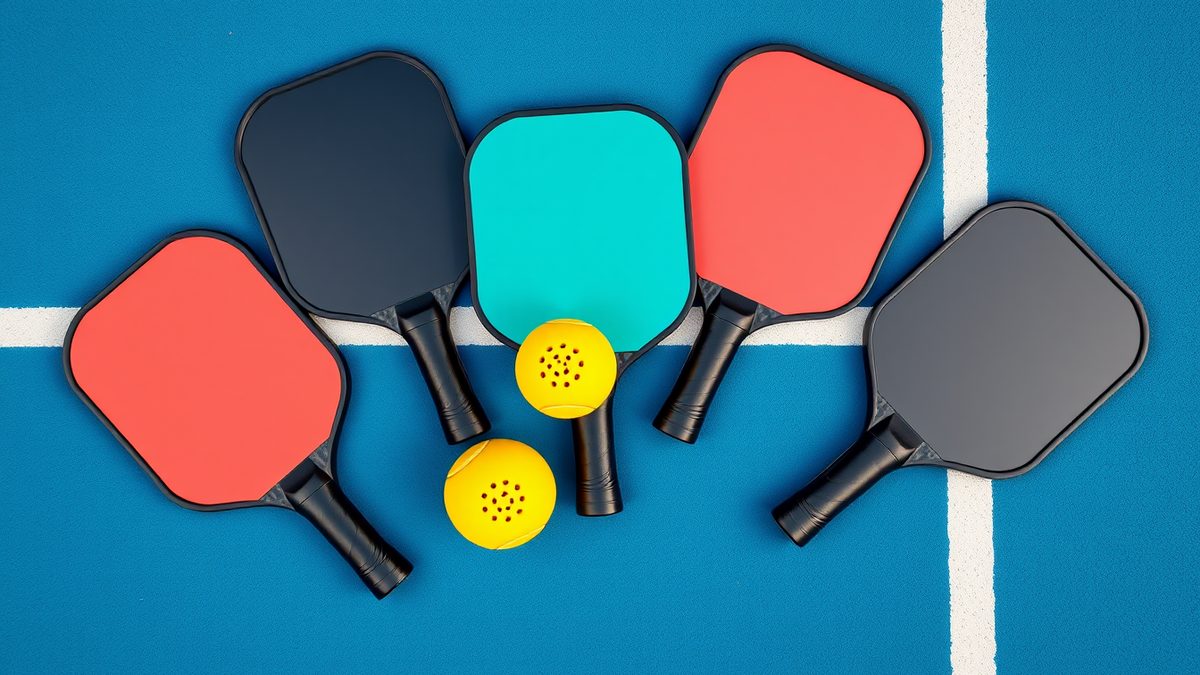
Our original version of this page came out in December 2024, and a lot of it no longer holds. Several paddles it recommended have been retired or replaced, foam cores went from novelty to normal, and a second approval list now decides which paddles are legal on the pro tours. This is the 2026 rewrite: the best pickleball paddles for beginners, improving players, and advanced players, with a budget pick at every level.
How we built this list: WherePickleball is a court directory, not a paddle test lab, and no brand paid for a spot here. We have no affiliate links on this page. Each pick below is cross-checked against the manufacturer's published specs and against independent on-court testing published in 2026 by Pickleheads, WIRED, and Tennis Overload, plus the spec-and-price checks at PaddleCompare. Prices are list prices as of October 2026. They move often, so check before you buy.
If you are still deciding what weight, shape, and grip you need, start with our pickleball paddle buying guide. This page is about specific models.
Jump to a section:- Best pickleball paddles of 2026 at a glance
- What changed since our 2024 list
- Best paddles for beginners
- Best paddles under $100
- Best paddles for intermediate players
- Best paddles for advanced players
- How to match a paddle to your game
- Foam core vs honeycomb core
- USA Pickleball and UPA-A approval
- Pickleball paddle brands compared
- Paddle sets and starter bundles
- Where to try a paddle before you buy
- FAQ
Best pickleball paddles of 2026 at a glance
| Paddle | Best for | Core | Weight | List price |
|---|---|---|---|---|
| 11SIX24 Pegasus Jelly Bean | Best beginner paddle overall | 16 mm | 8.0 to 8.3 oz | About $100 |
| SLK Dauntless Widebody | Most forgiving beginner paddle | 16 mm foam | 7.7 to 8.1 oz | $150 |
| SLK Valkyrie | Cheapest brand-name first paddle | 16 mm honeycomb | 7.9 to 8.1 oz | $80 |
| Vatic Pro V-SOL Tour Evergrit | Best value under $100 | 16 mm foam | 8.0 to 8.3 oz | About $100 |
| JOOLA Dash | Lessons, backup, family play | 10 mm honeycomb | About 8.2 oz | About $50 |
| Bread & Butter Loco | Best intermediate all-court paddle | 16 mm | 7.7 to 8.1 oz | About $150 (was $199) |
| Six Zero Coral | Best control paddle | 16 mm foam | 8.0 to 8.3 oz | $200 |
| Holbrook Fuze | Power and touch in one paddle | 14 or 16 mm foam | 7.8 to 8.0 oz | About $230 |
| CRBN TruFoam Barrage | Best advanced paddle overall | Full foam | About 8.0 oz | About $280 |
| RPM Q2 | Most power | 14 or 16 mm foam | 7.7 to 7.8 oz | About $250 |
| Honolulu J2CR Crystal Blue | Most spin, longest-lasting grit | 16 mm foam | 8.0 to 8.3 oz | About $195 |
| JOOLA Perseus Pro V | Reach, drives, what the pros play | 14 or 16 mm | About 8.1 oz (16 mm) | $299.95 |
What changed since our 2024 list
The 2024 version of this page recommended the SLK Evo Hybrid, Onix Graphite Z5, JOOLA Hyperion CFS 16, Selkirk Vanguard Power Air Invikta, JOOLA Scorpeus CFS 14, Selkirk Labs Project 003, and the Niupipo Explorer. Some of those are still fine paddles if you already own one. But three things changed enough that we rewrote the list from scratch instead of updating prices.
- The lineups turned over. Selkirk rebuilt its SLK range in February 2026 and retired the Halo, Evo, and Atlas series, so the SLK Evo pick is gone. JOOLA's CFS paddles were superseded by several newer generations, and the current flagship is the Pro V.
- Foam cores went mainstream. In 2024, a full-foam core was an expensive experiment. In 2026, foam builds start around $100, and most of the paddles reviewers rate highest use one.
- Approval got more complicated. USA Pickleball approval still covers most club and recreational tournaments. The pro tours now use a separate UPA-A list, and some popular paddles are on one list but not the other. More on that below.
What did not change: a paddle will not fix footwork, and the best paddle is still the one that suits your level. Spending $280 before you can rally is a worse plan than spending $100 and taking a clinic.
Best pickleball paddles for beginners
A good first paddle is forgiving. You want a wide face, a 16 mm core, a midweight build around 7.6 to 8.2 ounces, and a grip that fits your hand. Power is the last thing a new player needs. Every beginner pick below follows that recipe.
11SIX24 Pegasus Jelly Bean: best beginner paddle overall
The Jelly Bean is the paddle both Pickleheads and Tennis Overload put at the top of their 2026 beginner lists. It is a widebody (about 15.8 by 8.0 inches) on a 16 mm core with a raw T700 carbon and fiberglass face, at 8.0 to 8.3 ounces. The sweet spot is big, dinks and resets are easy to keep low, and the 5.75-inch handle leaves room for a two-handed backhand, which helps players coming from tennis. It costs about $100.
The trade-off is a modest power ceiling. That is the right trade for a new player. 11SIX24 has since added a Jelly Bean 2, which testers describe as even more short-game oriented.
SLK Dauntless Widebody: most forgiving beginner paddle
If you want to spend more once and keep the paddle for years, the Dauntless Widebody is WIRED's top beginner pick for 2026. It pairs a 16 mm full-foam core with perimeter weighting, an 8-inch-wide face, and a raw carbon surface, at 7.7 to 8.1 ounces with a 5.6-inch handle. The foam keeps off-center hits stable, so mishits still go roughly where you aimed. List price is $150. The elongated version adds reach if you already know you like a longer paddle.
SLK Valkyrie: cheapest brand-name first paddle
The $80 Valkyrie is the entry rung of Selkirk's rebuilt SLK line. It is a widebody (about 15.95 by 8 inches) with a 16 mm polypropylene honeycomb core and a textured fiberglass face, 7.9 to 8.1 ounces, with a 4.25-inch grip. Fiberglass is the livelier face material, so it is easy to hit hard and slightly harder to take pace off. For a first paddle from a brand with a real warranty, it is hard to beat at this price. The SLK Geo, at about $100, is the carbon-faced step up.
Best pickleball paddles under $100
The gap between a $100 paddle and a $200 paddle is much smaller than it was in 2024. Foam cores and raw carbon faces now show up under $100, mostly from direct-to-consumer brands.
Vatic Pro V-SOL Tour Evergrit: best value
Pickleheads ranks the V-SOL Tour Evergrit second overall in its September 2026 paddle rankings and calls it the paddle it would hand a beginner. For about $100, you get a 16 mm foam core (EPP foam with an EVA perimeter ring) and Vatic Pro's Evergrit face, which is designed to keep its texture longer than standard raw carbon. It comes in elongated, hybrid, and widebody shapes, at 8.0 to 8.3 ounces.
Control is the strength. Power is modest, so fast counters take a deliberate swing. One caveat for tournament players: it is not on the UPA-A list used by the pro tours, so check the USA Pickleball list if you plan to play sanctioned events.
JOOLA Dash: for lessons, backups, and family play
At about $50, the Dash is JOOLA's entry paddle: a thin 10 mm honeycomb core, a sandblasted fiberglass face, and a 15.5 by 7.9 inch face. The thin core makes it poppy and less forgiving than a 16 mm paddle, so it is the paddle on this list you are most likely to outgrow. It is still a real paddle from the sport's biggest brand at starter-set money, and a sensible pick for a loaner, a backyard, or a second paddle in the car.
If you want a 16 mm core under $100 instead, go back to the Valkyrie or the Jelly Bean.
Best pickleball paddles for intermediate players
Once you play regularly and can name the shot you keep missing, it makes sense to spend more. Most intermediate players do best with a hybrid shape: more reach than a widebody, a bigger sweet spot than an elongated paddle.
Bread & Butter Loco: best intermediate all-court paddle
The Loco is the paddle both Pickleheads and Tennis Overload name as their best intermediate pick. It has a 16 mm core, a raw T700 carbon face, and a hybrid shape of about 16.3 by 7.6 inches, at roughly 7.7 to 8.1 ounces. Testers praise it for doing both halves of the game: soft enough for resets from the back of the court, quick enough to win exchanges at the net, with heavy spin on rolls and serves. Bread & Butter cut the list price from $199 to about $150 in 2026.
Expect a short adjustment if you are coming from a plain fiberglass beginner paddle. The Loco is livelier, so rushed blocks can float. Like the Vatic Pro, it is not UPA-A approved, which only matters if you play pro-tour events.
Six Zero Coral: best control paddle
If you win by keeping the ball low and waiting for a mistake, the Coral is the paddle testers rate highest for control. It uses a 16 mm foam core with a textured raw carbon face, at 8.0 to 8.3 ounces, in widebody, hybrid, and elongated shapes. It soaks up pace on hard drives, so a ball at your feet turns into a reset instead of a pop-up, and the sweet spot is large. List price is $200.
The ceiling is power. It does not end points from the baseline the way the paddles in the next section do. The hybrid is the safest default. Choose the widebody for doubles defense or the elongated for singles.
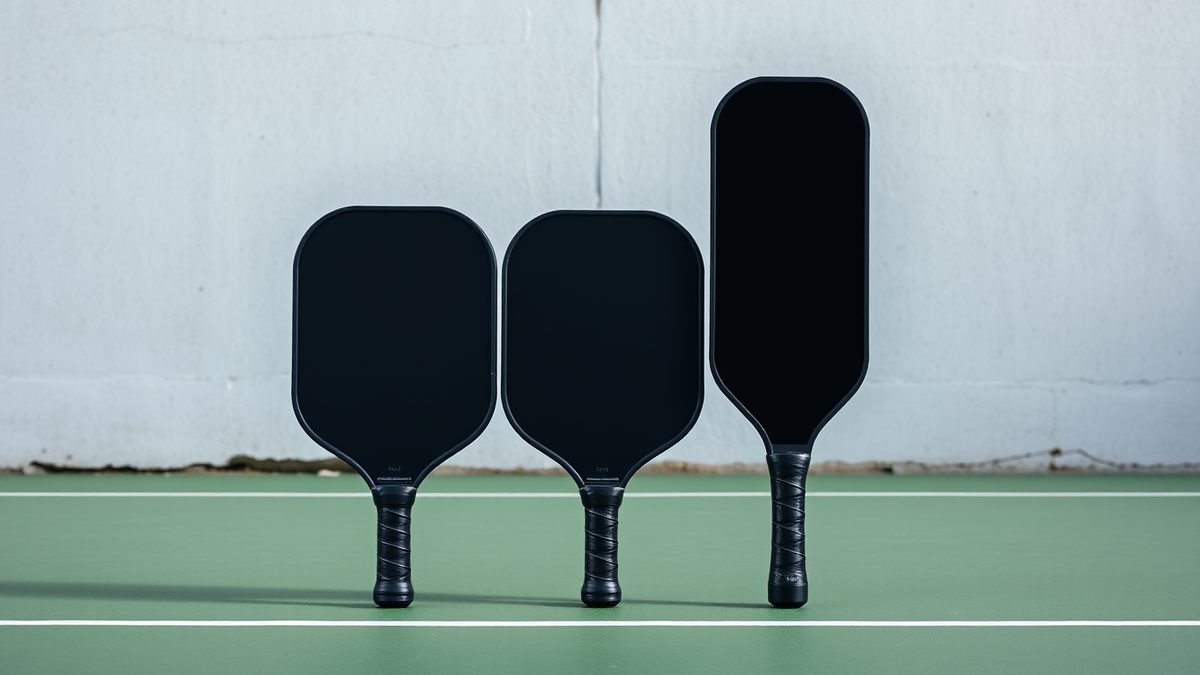
Shape changes a paddle more than any spec on the box. From left: a wide-body for the biggest sweet spot, a standard or hybrid shape for a bit of both, and an elongated paddle for reach and leverage at the cost of forgiveness.
Best pickleball paddles for advanced players
These paddles reward players who already hit the center of the face and control the angle. Handing one to a new player mostly produces faster mistakes.
CRBN TruFoam Barrage: best advanced paddle overall
The Barrage is Tennis Overload's top advanced pick and ranks fourth on Pickleheads' overall list. The hybrid version (CRBN calls it the TFB4; retailers often list it as the CRBN4) measures about 16.2 by 7.8 inches, weighs about 8 ounces, and uses a full-foam floating core with a raw carbon face. Power comes from dwell, the ball sinking into the face, so hard shots are easier to aim than on poppier paddles. About $280.
Pickleheads' tester found it light and twisty out of the box and much better with lead tape added. If you never want to tune a paddle, look at the Holbrook Fuze instead.
Holbrook Fuze: power and touch without tuning
The Fuze is the paddle that scored full marks for both power and control in Pickleheads' testing, which almost never happens. It has a dual-density foam core and a carbon-aramid-carbon face. The elongated version is 16.5 by 7.5 inches, 7.8 to 8.0 ounces, with a 5.5-inch handle, and it comes in 14 mm and 16 mm. List price is about $230.
Choose the 16 mm if you play doubles or care about your soft game. One approval detail: the elongated builds are on the UPA-A list, while the hybrid is approved by USA Pickleball but not UPA-A.
RPM Q2: most power
RPM's first full-foam paddle is the hardest-hitting paddle on Pickleheads' list. It uses an EPP foam core with varied density across the face and RPM's CarbonBite carbon surface, which puts heavy topspin on a hard swing so power stays in the court. It comes in widebody (16 by 8 inches) and elongated (16.5 by 7.5 inches), at 7.7 to 7.8 ounces, for about $250.
The pop never switches off, so resets take practice. Testers recommend the 16 mm version. The 14 mm is lively enough to make basic touch shots difficult.
Honolulu J2CR Crystal Blue: most spin
Pickleheads ranks the J2CR first overall in 2026, mainly for spin and for a textured surface that kept its bite after weeks of play. Most raw carbon faces go smooth within a couple of months of heavy use. It is a hybrid (16.2 by 7.8 inches) with a 16 mm multi-density foam core, 8.0 to 8.3 ounces, for about $195. Control is a step below the Loco and Coral.
Check before you buy it for tournaments. According to Pickleheads, the J2CR is UPA-A approved but not USA Pickleball approved, which means it is legal on the pro tours but may not be allowed at your local sanctioned event.
JOOLA Perseus Pro V: reach, drives, and what the pros play
The Perseus Pro V is the paddle Ben Johns uses, and Pickleheads notes that JOOLA's Pro V line is what most top pros compete with. It is an elongated 16.5 by 7.5 inch paddle with a 5.5-inch handle, a textured carbon face, and JOOLA's Propulsion core with a foam edge wall, at about 8.1 ounces in 16 mm. It is on both the USA Pickleball and UPA-A lists. Price: $299.95.
It is a specialist paddle, not an automatic upgrade. If you already own a healthy Pro IV, there is little reason to replace it. If you want JOOLA's current build with a wider face for doubles, the Scorpeus Pro V (16 by 8 inches) is the more forgiving version.
How to match a paddle to your game
Skill labels are only a starting point. Ask what goes wrong in your games and pick the paddle that fixes that:
- You pop up dinks and resets: a 16 mm core and a control-leaning paddle like the Six Zero Coral, Vatic Pro V-SOL Tour, or Jelly Bean.
- Your drives sit up and get punished: a lively foam paddle with good grit, like the RPM Q2 or CRBN Barrage, but only once contact is clean.
- You want one paddle for everything: the Bread & Butter Loco or Holbrook Fuze.
- Your arm or elbow hurts: go lighter and check grip size before you buy anything stiffer. A grip that is too small makes you squeeze.
- You play mostly singles: an elongated shape for reach. For doubles at the kitchen, a hybrid or widebody.
Two specs matter more than the marketing. Swing weight decides how quick a paddle feels at the net. Two 8-ounce paddles can feel completely different if one is head-heavy. Core thickness decides feel: 16 mm is softer and more forgiving, and 14 mm is faster and firmer. Our buying guide walks through weight, grip size, and shape in detail.
Foam core vs honeycomb core
For most of the sport's history, nearly every good paddle had a polypropylene honeycomb core between two face sheets. That build is still everywhere, including the Valkyrie and the Dash on this list. It is light, durable, and predictable.
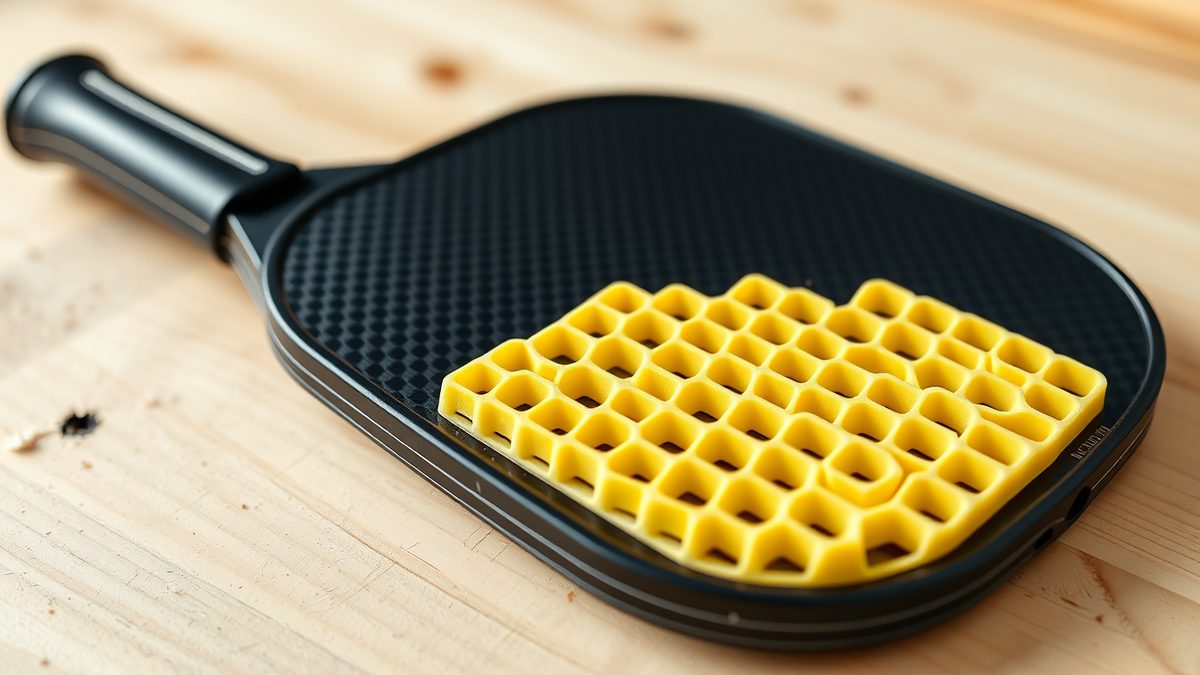
The honeycomb is the part you never see. Its thickness (usually 13, 14, or 16 mm) does more to change how a paddle feels than the face material printed on the box.
Full-foam cores, sometimes sold as Gen 4, replace or surround the honeycomb with foam. Testers describe more dwell time (the ball stays on the face a fraction longer), a muted feel, and power that comes from the paddle flexing rather than springing. Foam paddles also tend to hold their feel longer than thermoformed honeycomb paddles, which can delaminate or develop dead spots with heavy play.
Foam is not automatically better. A well-made honeycomb paddle that fits your game beats a foam paddle you cannot control. But if you are spending $150 or more in 2026, most of the best options are foam.
USA Pickleball and UPA-A approval: which list matters
If you only play socially, you can skip this section. If you enter tournaments, it decides whether the paddle in your bag is legal.
- USA Pickleball (USAP) approval is what most recreational, club, and sanctioned amateur tournaments require. Check the current USA Pickleball approved equipment list.
- UPA-A approval is required for professional PPA and MLP divisions. Our guide to pro pickleball tours explains how those tours fit together.
The lists do not always match. Some paddles with very aggressive grit are on UPA-A but not USAP, and some value paddles are on USAP but not UPA-A. Approval is also tied to the exact model, shape, and core thickness, not the paddle name. Before a sanctioned event, look up the full model name printed on your paddle, and check again close to the event, because approvals change faster than packaging gets reprinted. For finding events, see how to find pickleball tournaments.
Pickleball paddle brands compared
A lot of buyers pick a brand before a paddle. Here is what the brands on this list are known for in 2026.
| Brand | Known for | Start with |
|---|---|---|
| Selkirk / SLK | The widest range, from $80 starters to pro paddles, and long warranties | SLK Valkyrie or Dauntless |
| JOOLA | Table tennis heritage and the biggest pro-tour presence | Dash, or Perseus/Scorpeus Pro V |
| 11SIX24 | Forgiving shapes and durable grit surfaces | Pegasus Jelly Bean |
| Vatic Pro | Direct-to-consumer value: foam and raw carbon near $100 | V-SOL Tour Evergrit |
| Bread & Butter | Lively all-court paddles with heavy spin | Loco |
| Six Zero | Control-leaning paddles with durable surfaces | Coral |
| CRBN | Raw carbon and dense foam, predictable feel | TruFoam Barrage |
| Holbrook | Forgiving foam builds that need no tuning | Fuze |
| RPM | Grit and spin, now with a full-foam power paddle | Q2 |
| Honolulu | Spin and grit that lasts, sold in limited batches | J2CR Crystal Blue |
| Franklin, Onix, Paddletek, Engage | Long-running brands with big-box and sporting goods availability | Their entry models and sets |
There is no single best brand. Pick the shape, weight, and price first, then choose between the two or three brands that make it.
Paddle sets and starter bundles: are they worth it?
Sets of two or four paddles with balls and a bag are a popular buy, because they are the easy way for a family or a group of friends to try the sport. They are worth it for exactly that: a backyard, a driveway court, a vacation rental, or a first few sessions at the park.
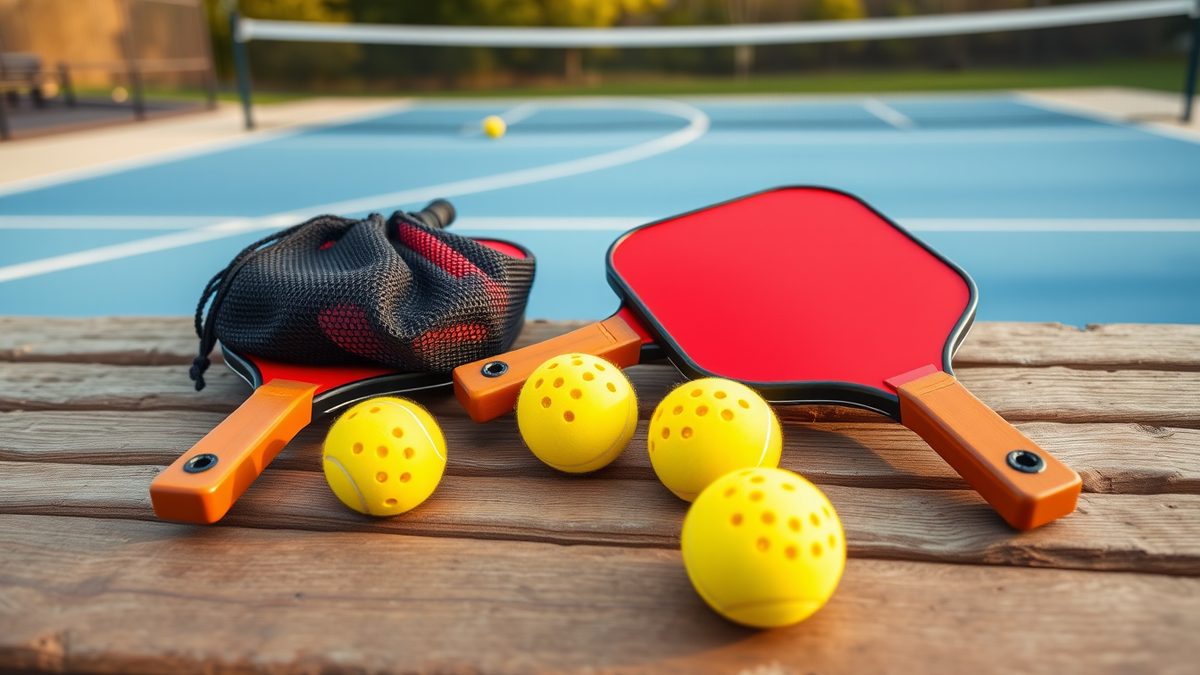
A typical starter bundle: two paddles, a bag, and a handful of outdoor balls. Fine for trying the game, and usually the first thing a regular player replaces.
Most sets sit in the entry tier: fiberglass or composite faces, thinner cores, and grips in one size. If you play every week, one real paddle like the Valkyrie or Jelly Bean will serve you better than a four-pack at the same price. When you shop for a set, look for:
- Listed weight, face size, and grip size for each paddle. A set that lists none is a toy.
- A polymer honeycomb core, not wood.
- Balls that match where you play. Outdoor balls have smaller, more numerous holes. Indoor balls are softer with larger holes.
- A brand you can contact about a warranty.
For the rest of the kit, from court shoes to overgrips and edge guard tape, see our pickleball accessories guide.
Where to try a paddle before you buy
Reviews narrow the list. Your hands make the decision. The best way to choose between two paddles is still to play a game with each.
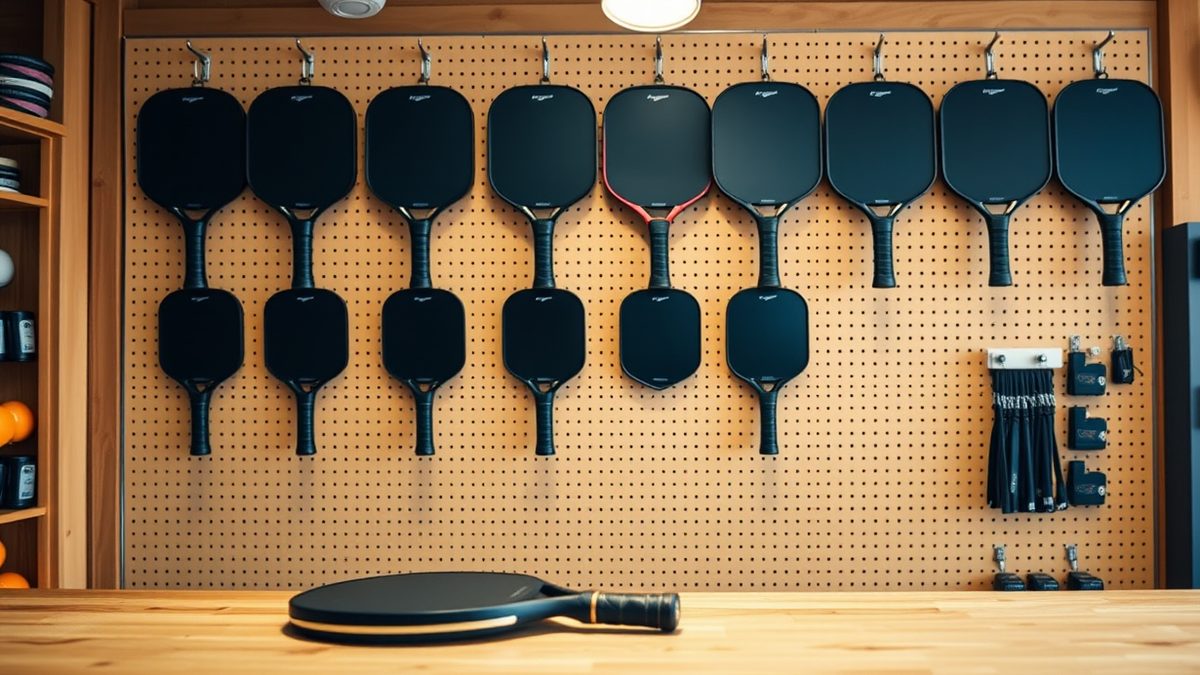
Pro shops at clubs and indoor facilities often run demo programs, and many direct-to-consumer brands offer a trial window. Read the return terms before you remove the protective film. The easiest demo is free: at open play, ask the people next to you. Pickleball players will happily hand you their paddle for a game.
To find a place to play, use our pickleball court finder or read how to find pickleball courts near you. Clubs and leagues are where you will meet the most paddles in one evening. Our clubs and leagues guide shows how to find them in your state.
Best pickleball paddles FAQ
What is the best pickleball paddle in 2026?
There is no single best paddle. It depends on your level. For most beginners, the 11SIX24 Pegasus Jelly Bean or SLK Dauntless Widebody. For improving players, the Bread & Butter Loco. For advanced players, the CRBN TruFoam Barrage or Holbrook Fuze. For the best value, the Vatic Pro V-SOL Tour Evergrit at about $100.
What is the best pickleball paddle for beginners?
A forgiving widebody or standard paddle with a 16 mm core, 7.6 to 8.2 ounces, and a grip that fits. The Pegasus Jelly Bean (about $100), SLK Dauntless Widebody ($150), and SLK Valkyrie ($80) all fit that description.
How much should I spend on a pickleball paddle?
About $80 to $150 for a quality first paddle and $150 to $250 for an upgrade once you know what you want to change. Above roughly $200, the gains are refinements that mostly show up at the 4.0 level and above.
Is a 14 mm or 16 mm paddle better?
A 16 mm core is the safer choice for beginners, doubles players, and anyone who values control. A 14 mm core is faster and firmer, which suits experienced attackers who can control a livelier face.
Which brand of pickleball paddle is best?
No brand wins every category. Selkirk and JOOLA have the widest ranges, Six Zero leads on control, 11SIX24 and Honolulu on durable grit, and Vatic Pro on value. Choose the shape and weight first, then the brand.
Are the best pickleball paddles from 2024 still good?
A healthy 2024 paddle still plays. Replace it if the face has gone smooth, the core has dead spots, or it rattles. Several 2024 favorites, including Selkirk's SLK Evo line, have since been retired, so you may not be able to buy the same model again.
Is there a best pickleball paddle for women or men?
Paddles are unisex. Weight, grip size, and shape matter, not gender. Smaller hands usually want a smaller grip (around 4 to 4.125 inches), and anyone with arm pain should stay at the lighter end of midweight.
Do I need a USA Pickleball approved paddle?
Only for sanctioned tournaments, and pro-tour events use the separate UPA-A list. For recreational play, leagues, and open play, any paddle is fine. Check the exact model and core thickness on the current list before a sanctioned event.
The short version: buy forgiveness first, a 16 mm core, a grip that fits, and a price you will not regret. Play for a few months, notice which shot keeps failing, and let that pick your next paddle. Then go find a game on the court map.