Pickleball Tournaments: How to Find, Choose, and Register for Events Near You
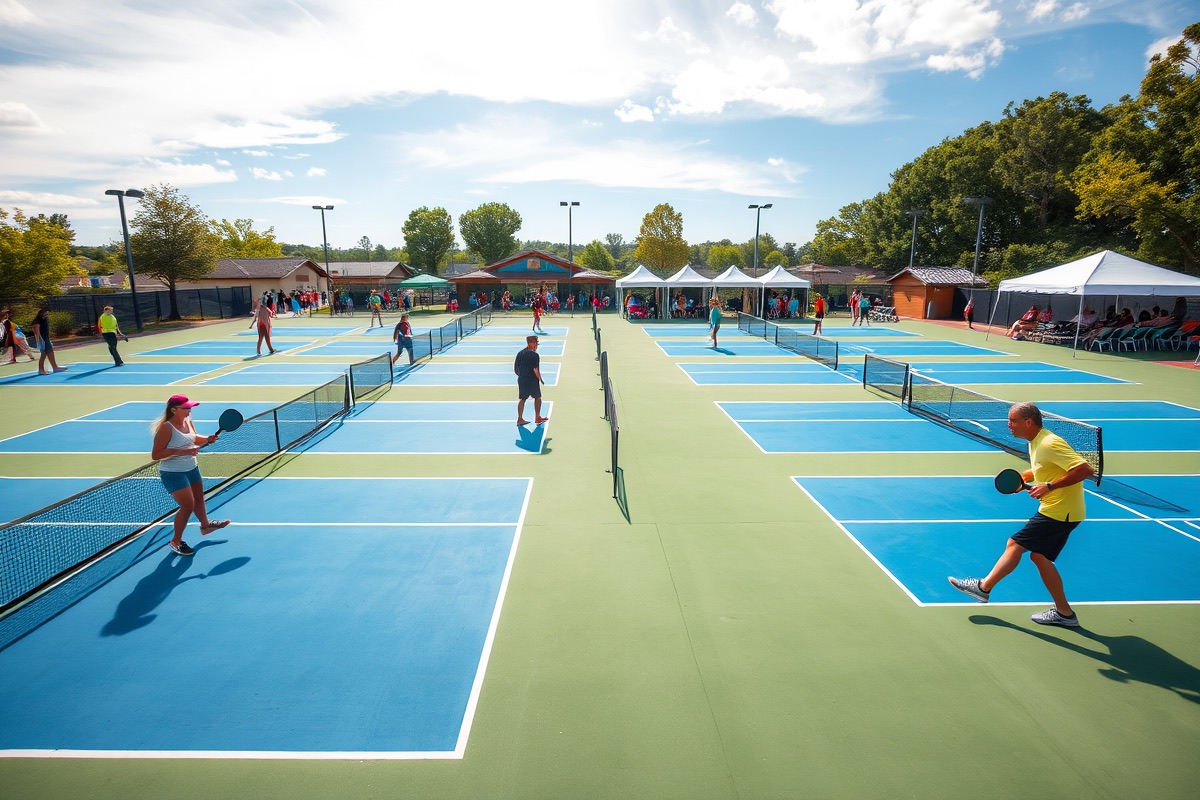
Playing pickleball tournaments is the step after open play: a start time, a division, and opponents who signed up to compete. This guide shows where to look, how skill and age brackets work, how registration goes, and what to bring the first time. It is for club players, not a shortcut onto a pro draw.
Jump to a section:- Where to find events
- Types of events
- Skill and age divisions
- Formats and scoring
- How to register
- What it costs
- Choosing a first event
- Day-of checklist
- FAQ
Where to find pickleball tournaments near you
If you have searched "pickleball tournaments near me" and landed on old flyers mixed with national calendars, use these sources in order. A listing only helps if your division is still open.
PickleballBrackets
PickleballBrackets (pickleballbrackets.com), the registration side of Pickleball.com, is the largest US tournament registration platform. The product name is Pickleball Tournaments, shortened to PT. Browse without an account. Filters cover date, location, format, and organization, including PPA, APP, and USA Pickleball. A free account is required to register and pay. Before you pay, match the city, venue, and organizer, and confirm your division is actually offered. Similar names are common.
USA Pickleball tournament listings
The USA Pickleball tournament listings confirm sanctioned events, Golden Ticket events, and collegiate competitions. Sanctioned means the event runs under USA Pickleball rules, not just a club round robin. If a flyer says sanctioned, it should appear here.
Pickleball Den
Pickleball Den is another registration platform. Some sanctioned events and some Golden Ticket events use it instead of, or along with, PickleballBrackets. Register only on the site the event page names.
All of these official sources, plus pro tour schedules and a pre-registration checklist, are collected on one page in our pickleball tournaments hub.
Clubs, parks, and the courts you already use
Events you can drive to are often posted closer to home:
- Your club email, app, or bulletin board
- The city or county parks and recreation calendar
- Indoor facility chains and the league organizers who run your weeknight games
- Local Facebook groups and Meetup groups for your courts
- Open play. Ask the player who always knows the calendar.
WherePickleball maps courts and clubs, not a tournament schedule. Open the court finder, find venues where people already play, and ask the desk what is posted. State and city counts in our directory are on the stats page. For participation, membership, and sanctioned-tournament numbers, see pickleball statistics 2026.
Popular pickleball hubs with lots of courts and organized play include Mesa and Scottsdale in Arizona, Naples in Florida, Indian Wells and Palm Desert in California, and Austin in Texas. Use them to find practice courts and clubs, not as a list of events. For trip ideas, see best cities for pickleball in 2026.
Types of pickleball tournaments
The type changes the rules, whether you need a membership, and how long the day runs.
Local, club, and charity events
Start here. A club championship, a one-day parks bracket, or a fundraiser usually means a shorter drive and several matches. House notes on warm-up, tiebreaks, and score cards are the rules for that day.
Sanctioned amateur events
Sanctioned events run under USA Pickleball: skill and age divisions, a membership, and paddles on the approved list. Results are recorded, so the rating on your account matters. The page states the rating cap, the ball, check-in, and any medal-match scoring change.
Golden Ticket qualifiers
A Golden Ticket tournament is a qualifier on the path to USA Pickleball Nationals, and it is a USA Pickleball-owned event. That ownership decides the rating system below. Play one after you already know how a bracket day feels.
Pro tours, and the amateur draw beside them
The pro circuits players follow are the PPA Tour and the APP Tour. Major League Pickleball runs team events. Many pro events also run amateur brackets alongside the pros. You still register for a specific amateur division, with the same rating check you would use at a local sanctioned event. For how those pro pickleball tours differ, see PPA Tour vs MLP vs APP.
Age, team, singles, and indoor or outdoor
Senior and 50+ events are the same game with a narrower age field, either as the whole program or as a filter on skill. Most draws are doubles. Singles, mixed, and team formats (several lines, sometimes more than one partner) are common too. Indoor and outdoor change the ball and the conditions. Check which you entered before you pack.
Doubles entries go better after you read doubles communication. Singles entries should start with singles strategy. Kitchen, side-out, and dink are in the glossary.
How skill and age divisions work
Two labels usually stack: skill and age. A card might say men's doubles 3.5, 50+, or women's singles 4.0, 19+. If that pairing is not listed, the desk cannot add it.
Skill brackets
Common skill labels are 2.5, 3.0, 3.5, 4.0, 4.5, and 5.0+ Open. Open is the top flight at many events, for players at or above that floor. Read whether the number is a cap or a minimum. A 3.5 cap means at or under 3.5. A 4.0+ flight means 4.0 is the floor.
Age brackets
Common splits are 19+, 35+, 50+, 60+, and 70+, and they vary by event. Some events skip age. Your age on the cutoff date is what counts. A 50+ 4.5 draw is still a 4.5 skill band.
DUPR, UTR-P, and not sandbagging
DUPR is the official exclusive rating system for USA Pickleball-owned events such as Golden Ticket tournaments and Nationals. The scale runs roughly from 2.0 to 8.0. Create a free profile. The number comes from verified match results, not from a quiz. Some sanctioned events use UTR-P instead. The event page names which rating it checks. USA Pickleball explains how ratings are used on its skill level and ratings page.
Play at your rating. Do not sandbag, which means entering below your real level, or hiding results, so the opponents are easier. With no rating yet, self-rate from the players you split with at open play, not from one best-day win. A first event can sit at that honest number or, if the rules allow it, slightly under. That is not a 3.0 entry when you already play with 4.0 teams. If you and a partner differ, read the division note before either of you pays.
Formats and how games are scored
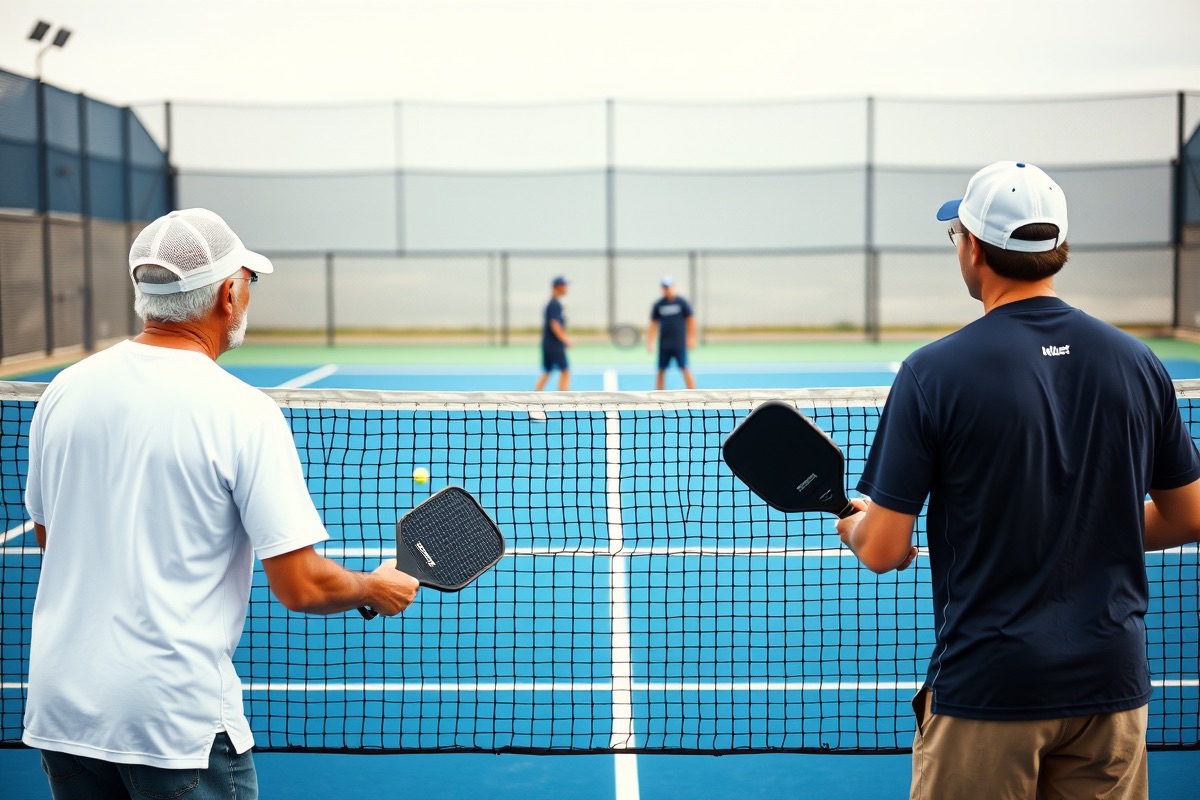
The event picks the format. You pick a division that uses it.
| Format | What you play | What to expect |
|---|---|---|
| Round robin | Matches inside a pool | A loss does not end the day |
| Pool into a bracket | Pool play, then a knockout | Pool matches still count |
| Double elimination | One loss drops you to a back draw | Plan on a full day |
| Single elimination | One loss ends the bracket | Fewer matches |
In double elimination, the back draw may be consolation or a path into a medal match.
Games are typically to 11, win by 2. Medal matches often change, sometimes best 2 of 3 and sometimes to 15. The event sheet governs. If side-out scoring is fuzzy, read pickleball scoring rules before you leave. Report scores the way the desk asks, on paper or in the registration app.
How to register for an event
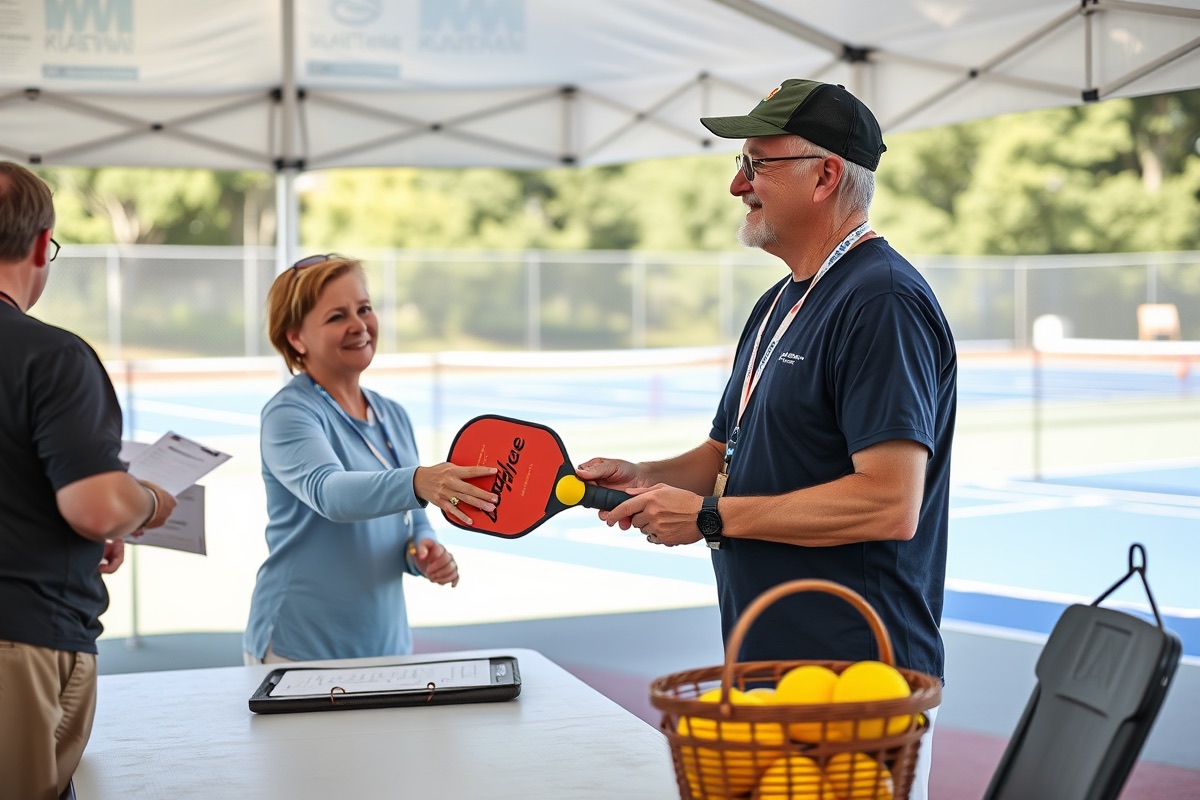
Work in this order. The check-in tent will look up this same form.
- Create a free account on the platform that event uses. PickleballBrackets is the common one. Use the name you want on the draw.
- Filter by date, location, format, and organization until the city, venue, and start time match.
- Open the divisions. Confirm your skill band, age band, and category exist. Note whether the rating is DUPR or UTR-P, and whether the number is a cap or a minimum.
- Pick the division. Add a partner, or choose "need a partner" if there is a partner finder. Do not pay for doubles when the form has no partner field and hope someone appears.
- Pay and save the confirmation. That email is what you show if the desk cannot find you.
- Watch the deadline and the waitlist. A full division closes. A waitlist only helps if you check it. Read the refund rules before you pay.
Sanctioned events also require a paid USA Pickleball membership at the Challenger or Champion tier. Link the membership ID on your registration account before you enter. An unlinked ID can leave the entry incomplete. One bracket is enough the first time. A second one, such as mixed plus doubles, can overlap, and you and your partner need to agree on the division before either of you pays.
What pickleball tournaments cost
Cost varies widely by event. Read the event page for each of these, and do not treat another player's weekend as a price list:
- A registration fee for the event
- Sometimes another fee for each extra bracket
- A USA Pickleball membership when the event is sanctioned
- Travel and a hotel when it is not a local day trip
A local club bracket may only cost the drive. A Golden Ticket or a pro-site amateur bracket can mean a flight and a room. Price that trip from the event's city, and read whether a withdrawal refunds the fee.
Choosing your first tournament
Make the first one easy to finish.
- Local. A drive you would already make for league night.
- One day. Leave multi-day hotels and early medal rounds for later.
- At your rating, or slightly below it if the event allows that choice. Re-read the sandbagging note if "slightly below" is turning into a whole level below.
- Round robin, so a bad first game does not end the day.
- A familiar doubles partner. Nerves are a bad time to invent calls. Play a few rec sessions together first.
Beginners can play. Look for a novice label or a 2.5 or 3.0 band, and pick a local one-day round robin. You still need the two-bounce rule, the kitchen, and a legal serve. If rallies are shaky, spend a few sessions on beginner drills, then enter.
First-tournament checklist
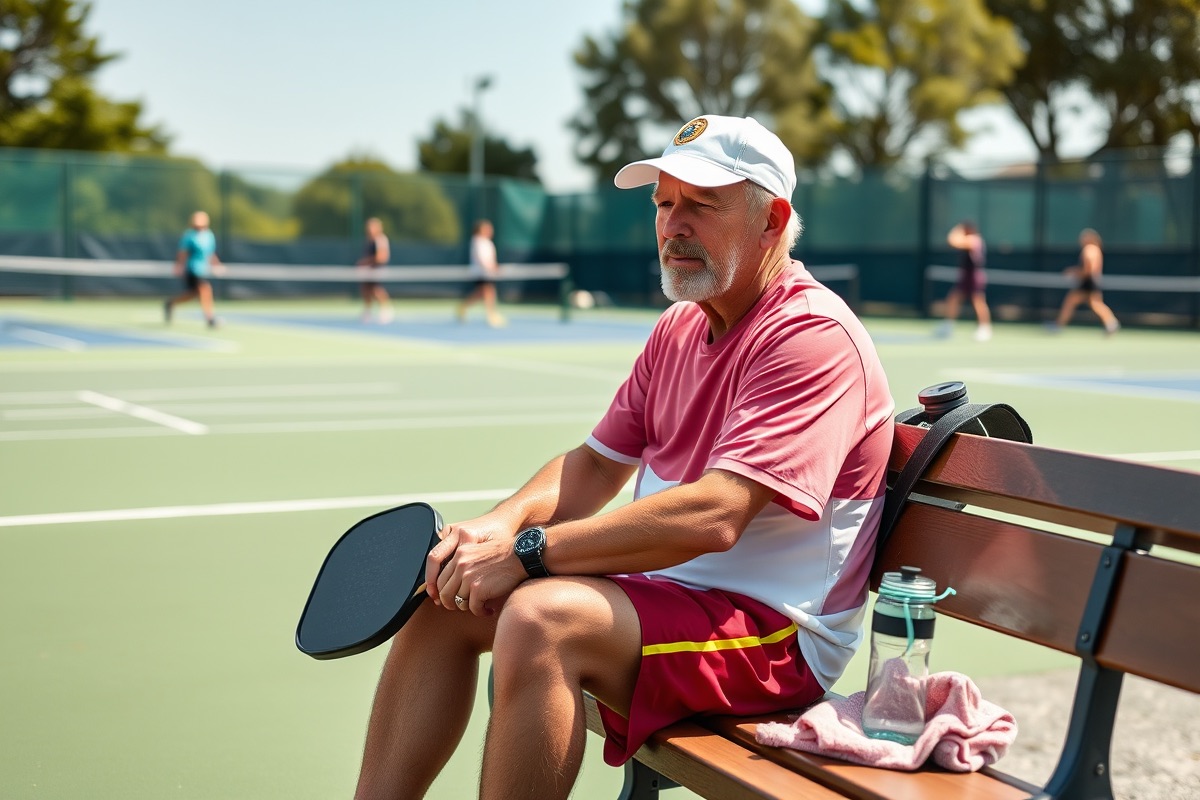
The night before, copy the check-in time, the ball, and the division name from your confirmation. Leave early enough to clear the tent line and still warm up.
- Check in early with your confirmation. Fix a partner or division error before the first start.
- Warm up before the first match. The hitting court may not be your match court, so keep it short if others are waiting.
- Know the ball named on the event page. The ball in your bag may not be the one that draw uses.
- Bring two paddles. For sanctioned play, both need to be on the USA Pickleball approved list. Buying a first one? Use the paddle guide, then confirm it is approved.
- Pack water, snacks, a towel, sunscreen, and layers. Outdoor sites swing from cool mornings to hot afternoons.
- Know the score and the manners. Read the scoring guide and the etiquette guide. You call lines on your side. Some events add referees for medal matches only.
- Guard your legs. Three matches back to back is when injury prevention matters.
Between matches, sit, eat, and check your next court and start time. If weather stops play, wait for the desk. On a disputed line call, follow the event's procedure, then play the next point.
Pickleball tournament FAQ
How do I find pickleball tournaments near me?
Filter PickleballBrackets by location and date, then check sanctioned, Golden Ticket, and collegiate events on the USA Pickleball list. Ask your club, parks department, and regulars at courts in the court finder.
Do I need a rating to play?
Club and charity brackets often let you self-rate. Sanctioned events, and USA Pickleball-owned events such as Golden Ticket and Nationals, check a rating. DUPR is the official exclusive system for those owned events: free profile, roughly 2.0 to 8.0, built from verified results. Some sanctioned events use UTR-P. Self-rate honestly until you have results.
Do I need a USA Pickleball membership?
For a sanctioned event, yes. You need a paid Challenger or Champion membership, and the ID has to be linked on your registration account. A club or charity event may not require it.
Can beginners play in tournaments?
Yes. Enter a novice, 2.5, or 3.0 band at a local one-day round robin. Know the kitchen, the two-bounce rule, and how to start the score.
Can I sign up without a partner?
Singles, yes. Doubles and mixed, only when that event offers "need a partner" or a partner finder. Otherwise find someone before you pay, and agree on a division you both fit.
What is a Golden Ticket tournament?
A qualifier on the path to USA Pickleball Nationals. DUPR is the official rating because the event is USA Pickleball-owned. Play a local bracket first.
What should I bring to my first tournament?
Two paddles (on the approved list if the event is sanctioned), water, snacks, a towel, sunscreen, layers, and your confirmation. Check the page for the ball, arrive early, and ask who calls lines.
Play a few games before you enter
Play a few games to 11 the week before, and say the score out loud. Start with the court finder, use a venue you can reach on a weeknight, and let that club tell you when the next local bracket opens. When you are ready to search, the tournaments page links every official listing in one place.
Pick a one-day round robin near you, enter the band you actually play, and treat the day as practice in how match day works.