Pickleball Clubs, Leagues & Open Play: How to Find Them in Your State (2026)
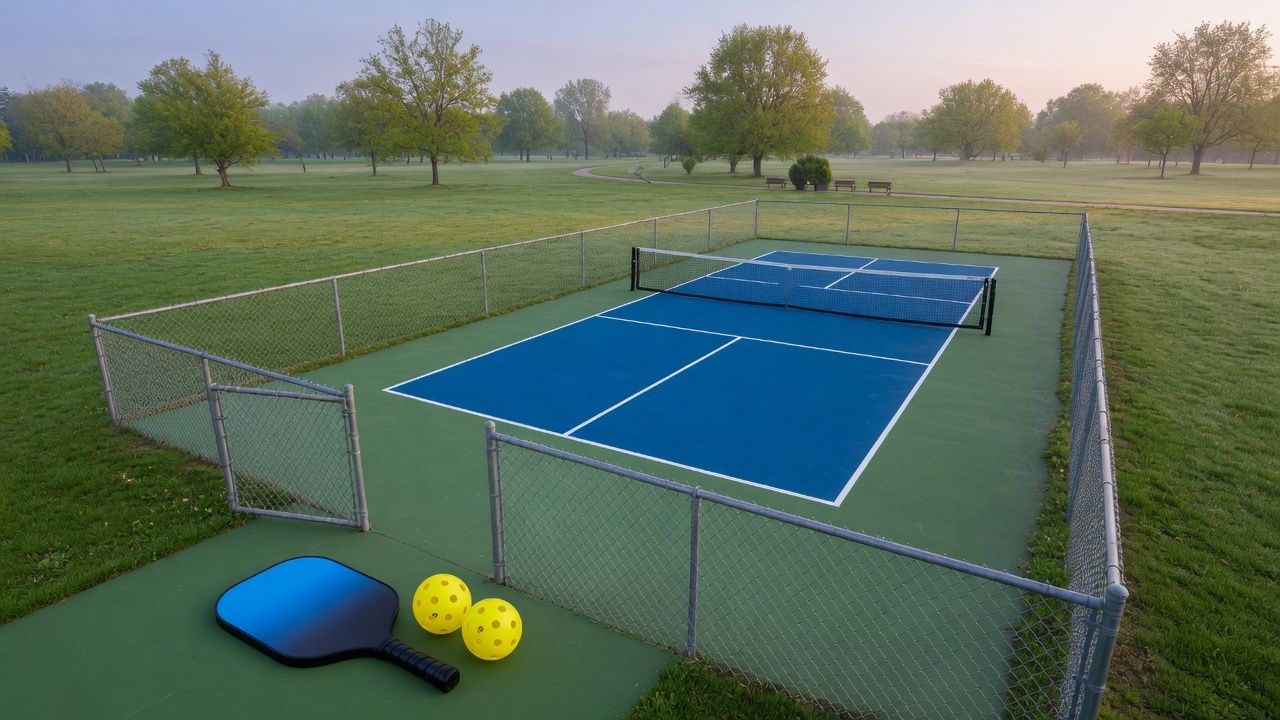
A search for pickleball clubs in your state, or for a "[state] pickleball network," is a search for people. A court is where a game can happen. A club, a league, an open-play hour, or a ladder tells you when other players will be there.
WherePickleball maps courts from OpenStreetMap. It does not run clubs, and it does not keep every league night on a live calendar. Schedules belong to volunteers, parks departments, and local groups, and they go stale. This guide names the kinds of organized play, then a search order you can use in any state.
Need a place to hit? Start with the court finder and finding pickleball courts near you. Need a group? Confirm the time with a person before you drive.
Jump to a section:- Clubs, leagues, open play, ladders, and lessons
- How to find pickleball clubs in your state
- What a "[state] pickleball network" means
- How pickleball leagues work
- Lessons and beginner clinics
- Open play, paddle racks, and rotation
- How to choose a club
- Courts and clubs by state
- FAQ
Clubs vs leagues vs open play vs ladders vs lessons
People use these words interchangeably. They overlap: one club can run open play, a ladder, and a clinic in the same week. The commitment is what changes.
| Kind | What it is | Best for | How to join |
|---|---|---|---|
| Club | An ongoing group at a park, recreation center, or private facility | Players who want a home group | Go to a posted session or ask about dues. Some clubs let you play once first |
| League | A seasonal schedule: rec night, club teams, or a ladder | A regular match, not a drop-in | Register for the season. The organizer sets the fee. Public rec leagues often cost less |
| Open play | Drop-in time. Whoever shows up rotates in | Trying a court, or playing without a partner | Show up with a paddle at the posted time. Park open play is often free |
| Ladder | A ranked list. You challenge nearby players and the order moves | Matches against a similar level | Join the group's ladder. It may be included, or it may have a season fee |
| Lessons | A clinic or a coach, not a standing game | Beginners, and players fixing one skill | Sign up with parks and rec, a club, or a coach. Expect to pay |
Ask the current fee, and what a rainout does to it. A price from another city or last season is not a quote.
How to Find Pickleball Clubs in Your State
Stop when you can confirm a person or a dated session. A logo is not a schedule.
- USA Pickleball ambassadors, by state or ZIP. USA Pickleball runs a volunteer Ambassador program. Search the ambassador directory by state and ZIP. Ambassadors work with clubs and recreation facilities and help keep Places to Play listings current. They are a contact, not proof that every town has a chapter.
- Pickleheads, for open-play times. The Places to Play page says Pickleheads is the official court and game finder of USA Pickleball, with courts, schedules, and open-play times. Use it for when people show up, then confirm at the court. Finders lag behind the group that runs the paddle rack.
- Global Pickleball Network. Global Pickleball Network hosts local networks that run ladder leagues, team leagues, tournaments, and event calendars. More than 1,900 networks are listed worldwide. Search by city, or create one. Read what the group actually runs before you drive.
- Parks and recreation, community centers, and YMCAs. Weekly play often lives only in a seasonal brochure. The office may be parks and recreation, a community center, a YMCA, or a senior center. Ask about pickleball, open play, and adult leagues. Last fall's night may not be this fall's.
- Facebook groups and Meetup. Search the city plus "pickleball." Useful for rain calls and finding a fourth. Also uneven: posts go stale. Confirm this week's court and time with someone who is going.
- Ask at the courts. Open the state map, pick a court you can reach, and go when players are likely there. Mornings and early evenings are often busier. That is a tendency, not a rule. Ask who organizes play, where the rack is, and whether beginners have their own time. Bring a paddle. The page is a map, not a promise a game is on.
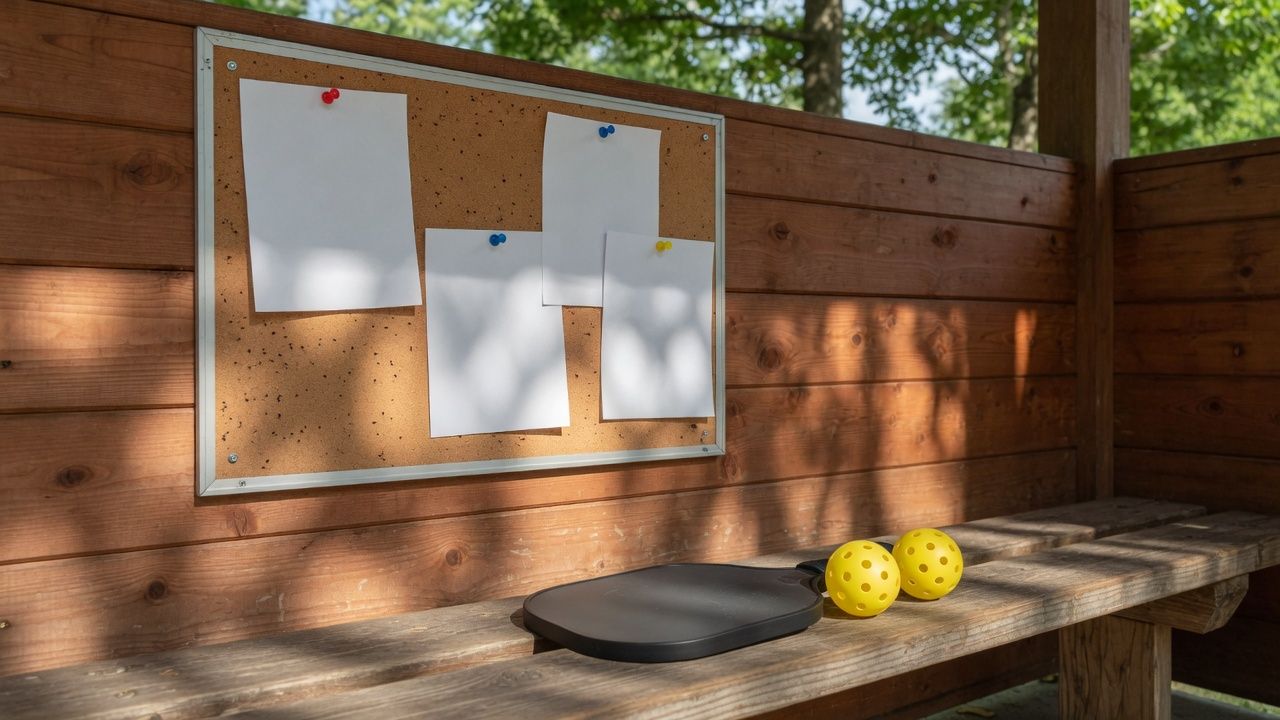
Parks still post the week on boards like this. The sheets in the photo are blank on purpose. On a real board, read the date. No date means ask whether the sheet is current.
What Is a "[State] Pickleball Network"?
"North Dakota pickleball network" or "Oklahoma pickleball network" usually means a local network on Global Pickleball Network, not a statewide association. Each network is a club or group that can run ladder leagues, team leagues, tournaments, and an event calendar. The directory lists more than 1,900 networks worldwide. Search by city, or create a page for challenges and events.
Two real examples: in North Dakota, a Fargo-Moorhead-West Fargo network is tied to the Fargo Moorhead Pickleball Club. In Oklahoma, Greater OKC Pickleball Club is in Oklahoma City. They are groups on that platform, not the official network for the whole state. A state-only search can surface them because the city is in that state. Membership size changes and is not quoted here. A page with no recent events is stale.
No page for your city does not mean nobody plays. The group may organize through the parks department instead. Courts near those examples are on the North Dakota and Oklahoma maps. The same city search works in the states below.
How Pickleball Leagues Work
A league is a signup, not a drop-in. Someone sets the weeks, the format, and the fee. The sheet for that league is the rulebook.
Recreation departments and community centers run seasonal leagues: a night, a run of weeks, a sign-up window. You enter alone or with a partner. Level names, when they exist, are often just "recreational" and "intermediate." Read who brings balls, what a rainout does, and how subs work.
Club team leagues put one or more teams against other teams, sometimes other clubs. Ask how the roster works, whether you need a partner, and what a missed match costs you.
Ladder leagues keep a list. You challenge someone nearby, report the result, and the order changes. Groups run ladders on Global Pickleball Network, in a chat, or on a whiteboard. Ask how challenges are scheduled and what happens if nobody answers.
DUPR is a widely used pickleball rating system. Many leagues and clubs use it to group players. Self-ratings commonly run roughly 2.0 to 5.0 and above. If you have no number, say so, and ask about a self-rating or a placement night. Do not invent one to fit a flight.
Expect a set day, a start time, and a fee the organizer chooses. Public rec leagues are often the cheaper weekly game. Private clubs cost more when the fee includes indoor courts. A league is not a tournament. For one-time events, use the tournament guide.
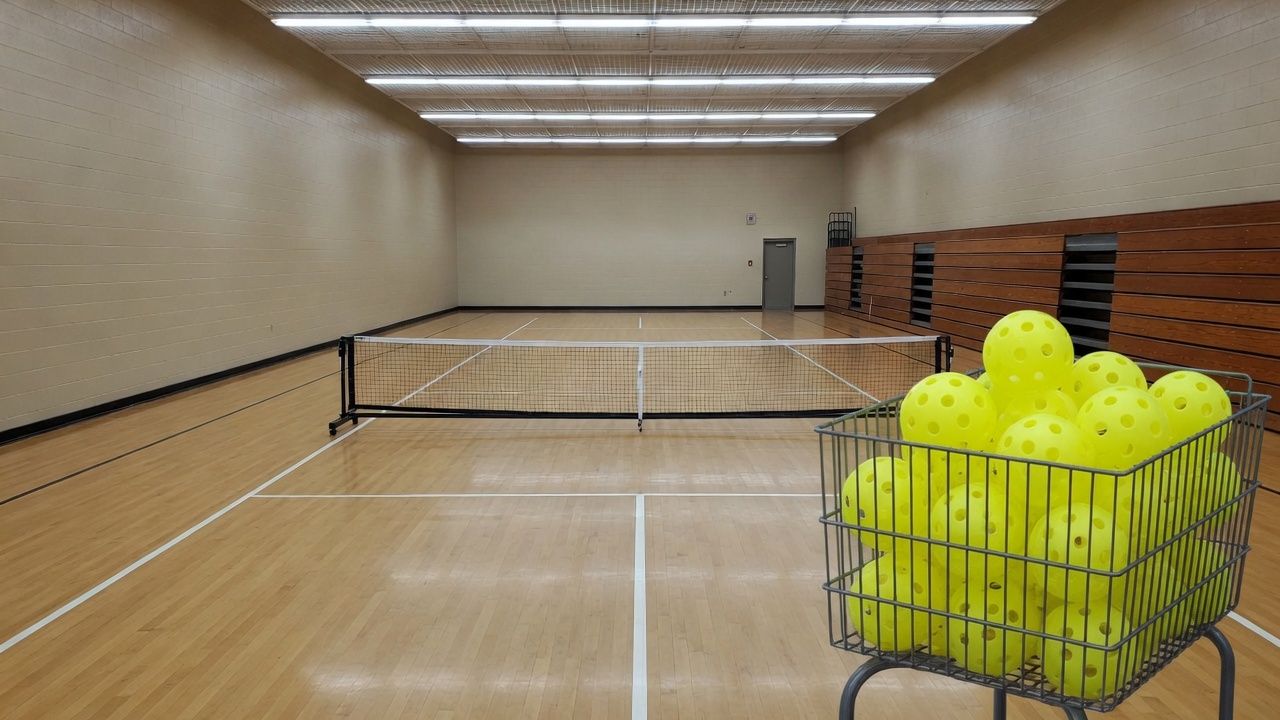
Indoor leagues often look like this: one portable net, a ball cart, and a reserved block on a gym floor other sports share. Confirm the building and the hour. School calendars move standing nights.
Finding Lessons and Beginner Clinics
Lessons are instruction. Parks and recreation intro clinics are the usual first stop, often labeled beginner, learn to play, or intro to pickleball. Community centers and YMCAs run the same classes. Some clubs add a learn-to-play hour before open play so new players are not thrown into a fast game.
A coach is someone you pay, alone or in a small group. Credentials are up to the coach and the club. Ask local players who taught them, then ask the coach:
- Where do we meet, and is the court reserved?
- What level is this, and what should I already know?
- How many people are in the group?
- What do I bring? Some first clinics loan paddles. Buying one? Use the paddle guide.
- What does it cost, and what is the cancellation rule?
- Do you teach rules, scoring, and the non-volley zone, or only drills?
Then practice with the beginner drills guide and read the rules guide. The kitchen and the two-bounce rule matter more at your first open play than a new paddle.
City searches are the same problem. People look for lessons, leagues, open play, and a club near Worcester, Massachusetts. The Worcester court page maps courts. It does not list every coach. Use parks and rec, a club session, and players on site.
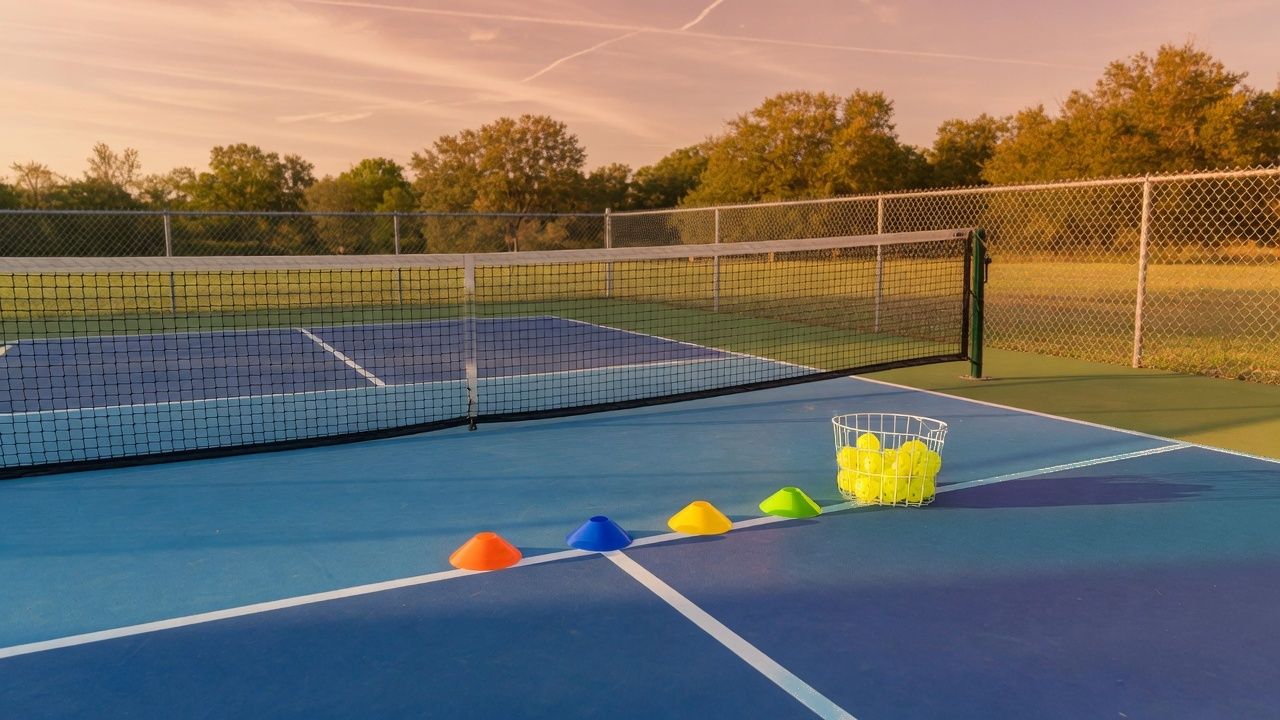
A first class is often cones by the non-volley line and a basket of balls, with one net across the middle. You need a reserved hour and someone explaining the rules, not a private facility.
Open Play Etiquette: Paddle Racks and Rotation
Open play needs no partner and no season form. You need a paddle and the local rule for who is next.
The usual tool is a paddle rack, or paddle stack. Put your paddle in the queue. When a court frees up, the next paddles go on. Open play commonly uses that queue to rotate who plays next, so strangers can share courts without a signup sheet.
Ask before you set a paddle down:
- Do winners stay, or does everyone rotate off?
- How long can four players hold a court?
- Is there a separate rack or hour for beginners?
- Which courts are saved for a league or a lesson?
Say you are new. Groups will often match you with other new players. If paddles are ahead of yours, wait. Taking a court out of order is how open play turns unpleasant.
Line calls and the rest of the unwritten rules are in the etiquette guide.
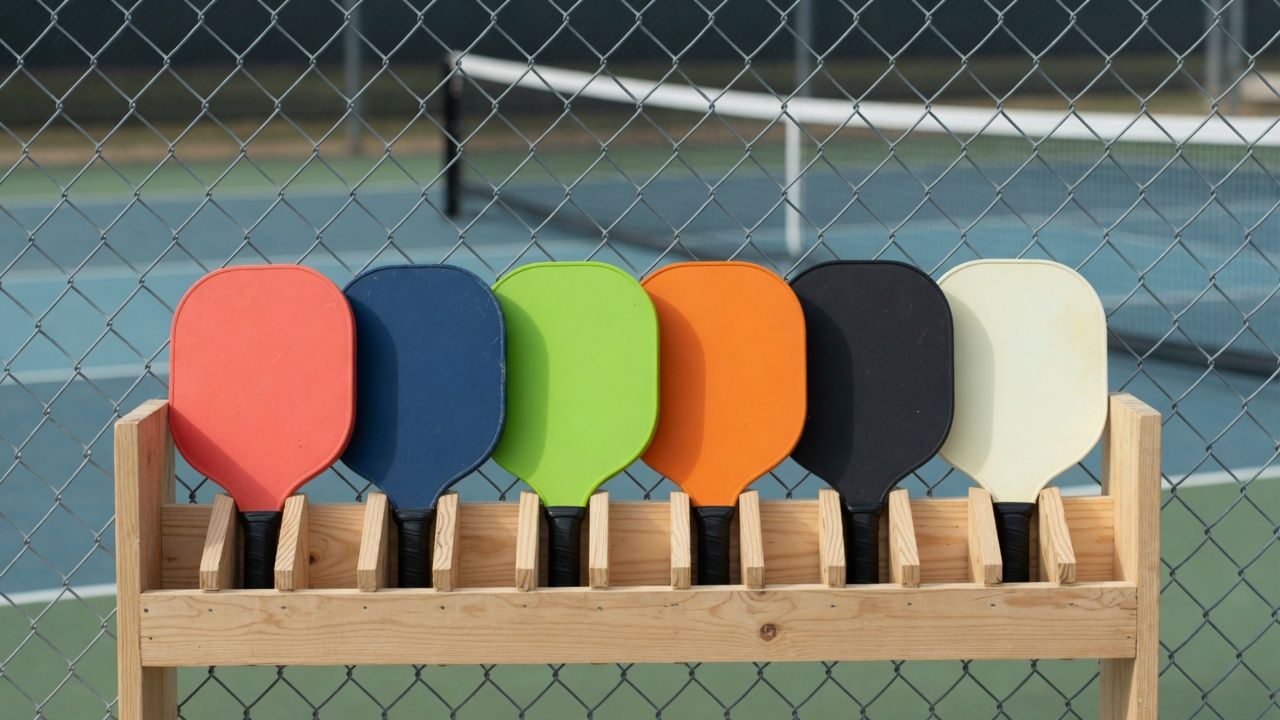
At many parks the rack is the system: paddles in a row, the court behind them. No rack? Ask. Some groups stack paddles on the fence or a bench. The order still has to be visible.
How to Choose the Right Club
A strong Tuesday group can be the wrong Saturday for a beginner. Play once before you pay for a season.
- Time and drive. A free group you will skip loses to a paid group on your way home. Indoor time matters where winter shuts outdoor courts.
- Who is welcome. Beginners in this session, or only at a labeled beginner hour?
- How you join. Drop-in, day pass, or membership. Ask the current fee. Skip undated "pay for the year" pages.
- Court access. Park groups share courts with anyone who walks up. Reserved indoor time can guarantee a game, and the fee is partly for that.
- How they sort. Open courts, a paddle rack, or DUPR bands.
- How you hear about changes. Chat, email, or the pavilion board. A missed rainout wastes the drive.
- The visit. Does someone explain the rotation, and does a new player get a game?
Wrong fit? Try another session. The club is not the court.
Find Courts and Clubs by State
Each state page maps courts and lists the cities with the most of them. Clubs and leagues are still local. Find the cities, then use the steps above.
- North Dakota pickleball courts & clubs
- Oklahoma pickleball courts & clubs
- Missouri pickleball courts & clubs
- Connecticut pickleball courts & clubs
- Oregon pickleball courts & clubs
- Alabama pickleball courts & clubs
- Rhode Island pickleball courts & clubs
- Arizona pickleball courts & clubs
- Colorado pickleball courts & clubs
- Illinois pickleball courts & clubs
- Indiana pickleball courts & clubs
- Texas pickleball courts & clubs
- Washington pickleball courts & clubs
- California pickleball courts & clubs
- New Hampshire pickleball courts & clubs
- Florida pickleball courts & clubs
- Idaho pickleball courts & clubs
- Tennessee pickleball courts & clubs
- Maine pickleball courts & clubs
City hubs work the same way. For lessons, leagues, open play, or a club near Worcester, Massachusetts, open Worcester pickleball courts, then ambassadors, Pickleheads, a Global Pickleball Network city search, and the parks department. Every other state is on the court finder.
Pickleball clubs and leagues FAQ
How do I find pickleball clubs near me?
Open your state in the court finder. Search the ambassador directory by state or ZIP, check Pickleheads open-play times on the Places to Play page, search Global Pickleball Network by city, and call parks and recreation. Confirm the time before you drive.
What is a pickleball network?
On Global Pickleball Network, a network is a local club or group that can run ladders, team leagues, tournaments, and an event calendar. More than 1,900 are listed worldwide. You search by city or create one. "Missouri pickleball network" often finds one of those pages, not a single official body for the state. A Fargo-Moorhead-West Fargo network tied to the Fargo Moorhead Pickleball Club, and Greater OKC Pickleball Club in Oklahoma City, are real examples.
How do pickleball leagues work?
An organizer sets the season, the format, and the fee. Parks departments run seasonal leagues, clubs run teams, and ladders move after challenges. Many groups sort players with DUPR. Self-ratings commonly run roughly 2.0 to 5.0 and above. Read that organizer's sub, weather, and refund rules before you pay.
Do I need a USA Pickleball membership to join a club or league?
Clubs and leagues set their own rules. A parks league or a casual club may not require a membership. Players in USA Pickleball-sanctioned tournaments typically need a USA Pickleball membership. Ask which kind of event you are joining.
Where can beginners find pickleball lessons?
Check the parks and recreation brochure for an intro clinic, ask a club about learn-to-play, or ask players for a coach. Confirm the meeting place, the level, the cost, and whether rules are taught. Then use beginner drills and the rules guide before open play.